Phone:
+85295718875
Email:
support@just-wonders.com

Phone:
+85295718875
Email:
support@just-wonders.com
For online sellers, getting a product listed is only the beginning. Once an order comes in, the seller must manage inventory, packaging, order processing, shipping, and tracking. This is where dropshipping warehouse shipping becomes important. Instead of handling every package yourself, you can work with a warehouse that stores products, prepares orders, and ships them to customers.
For sellers operating on Etsy and eBay, a reliable fulfillment process can make daily operations much easier. Good warehouse fulfillment can reduce manual work, improve shipping consistency, and help sellers scale their stores.
However, Etsy dropshipping and eBay dropshipping do not follow exactly the same rules. Sellers should understand the platform requirements before choosing a warehouse or fulfillment model.
Dropshipping warehouse shipping is a fulfillment model where a warehouse or fulfillment partner manages part of the order process for an online seller.
The basic process is simple:
This model allows sellers to focus more on product research, marketing, customer service, and store growth.
Instead of keeping dozens or hundreds of products at home, sellers can use a centralized warehouse to manage inventory and shipping.
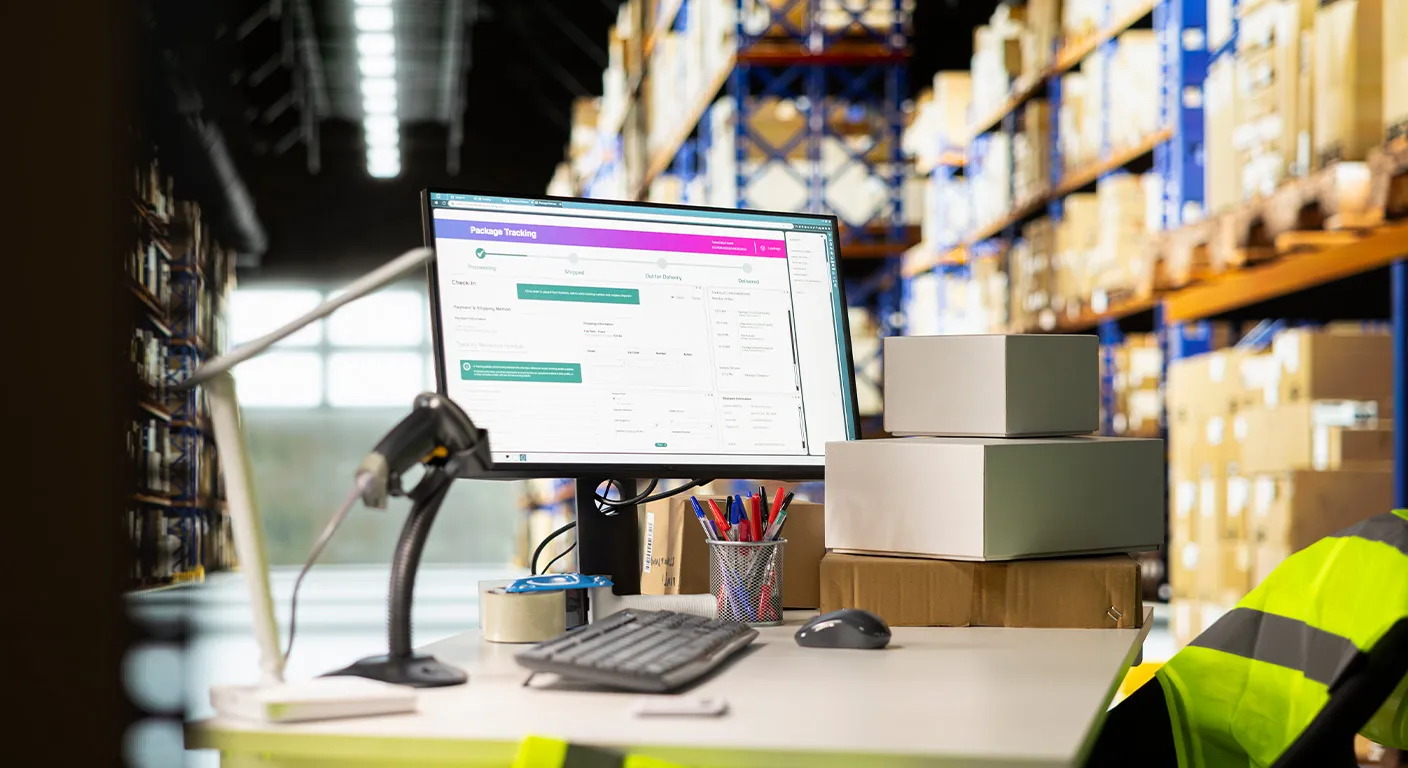
Shipping can become complicated as order volume increases.
A seller with five orders per day may be able to process everything manually. A seller with 50 or 100 orders per day has a different challenge.
Manual fulfillment can lead to:
With professional dropshipping warehouse shipping, many of these tasks can be organized into a repeatable workflow.
The warehouse becomes an important part of the seller’s ecommerce operation.
A complete dropshipping warehouse shipping workflow usually includes several stages.
The first step is finding products that fit the seller’s business.
After products are selected, inventory can be purchased and sent to the warehouse. The warehouse records the product information and quantity.
This gives sellers a clearer view of available inventory.
For products with stable demand, sellers can keep a certain amount of stock in the warehouse. This can help reduce processing time when new orders arrive.
The warehouse stores products until orders are received.
A good storage system should make products easy to locate. Products should have clear SKUs, quantities, and storage records.
Proper inventory management is especially important when sellers have multiple sales channels.
For example, the same product may be sold through an online store, eBay, and other ecommerce channels.
Without accurate inventory information, overselling can become a serious problem.
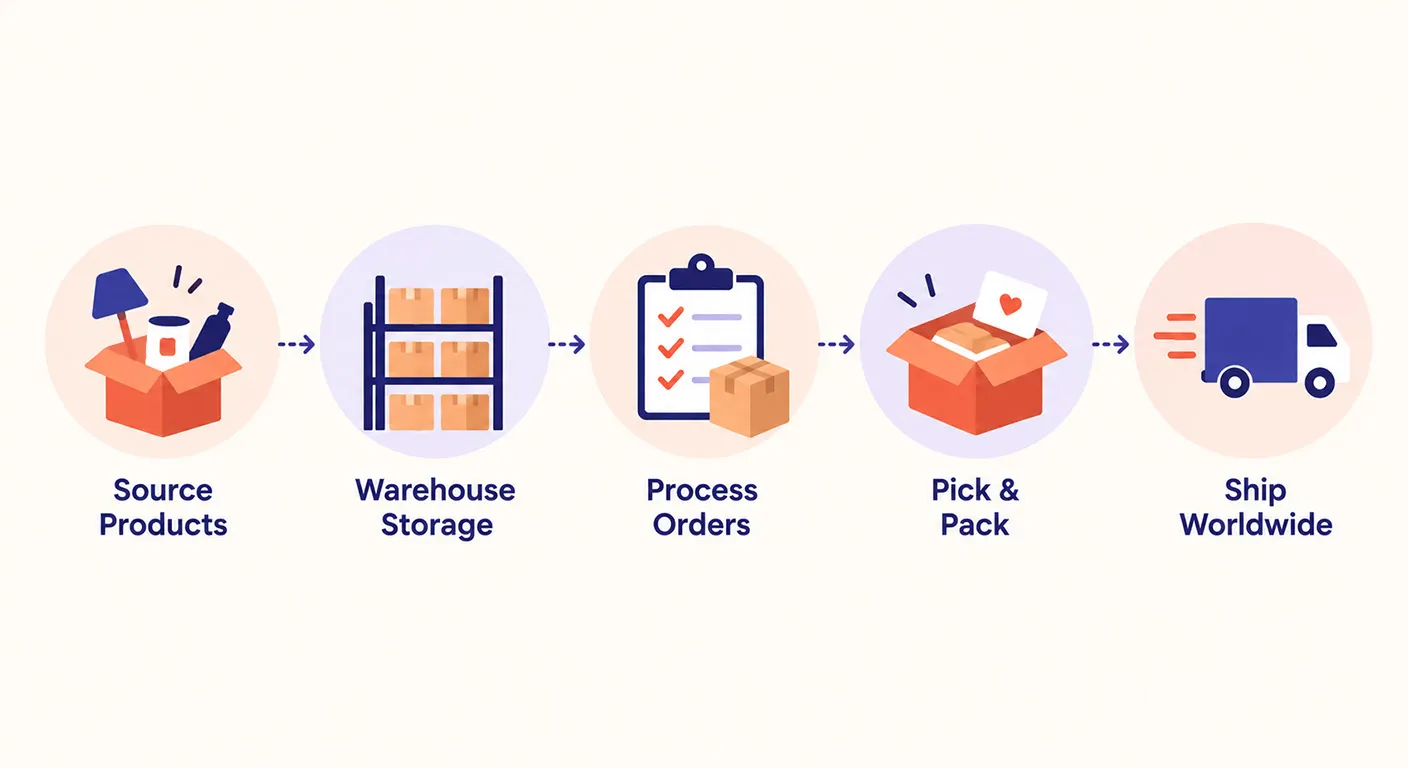
When a customer places an order, the order details need to reach the warehouse.
The information may include:
The warehouse then checks the order and prepares it for fulfillment.
This is one of the most important parts of warehouse fulfillment.
Warehouse staff locate the correct product and prepare the package.
Depending on the seller’s requirements, the warehouse may also provide customized packaging.
For example, a seller may want:
These details can make the fulfillment experience more consistent with the seller’s brand.
After the package is prepared, the warehouse selects an appropriate shipping method.
The choice can depend on:
Once the package is shipped, tracking information can be returned to the seller or connected system.
Accurate tracking is important because customers want to know where their orders are.
Etsy dropshipping requires more attention to platform rules than many other ecommerce models.
Etsy currently states that ordinary dropshipping of commercially available products is not allowed, with limited exceptions such as certain craft and party supplies. Etsy does allow sellers to work with production partners when the products are based on the seller’s original designs or buyer customization.
This distinction is important.
An Etsy seller should not simply find a ready-made product, list it on Etsy, and have a supplier send the same product directly to the buyer.
Instead, a compliant model may involve original designs, customized products, handmade products, or eligible supplies.

For eligible Etsy businesses, a warehouse can still provide valuable fulfillment support.
For example, an Etsy seller may create original products and use a production or fulfillment partner to store and ship them.
The workflow can look like this:
Original Design → Production → Warehouse Storage → Customer Order → Picking → Packaging → Shipping → Tracking
Etsy states that production partners, including print-on-demand services, can fulfill and ship orders when the items are based on the seller’s original design or buyer customization.
This makes warehouse fulfillment useful for Etsy businesses that need help handling growing order volumes.
Etsy sellers are responsible for providing accurate shipping information and meeting the expectations they set for customers.
Etsy recommends that sellers consider carriers, pricing, processing times, packaging, and delivery options when creating a shipping strategy. Sellers can also use third-party fulfillment services, but they remain responsible for the customer experience.
Therefore, sellers should choose a warehouse partner that can provide reliable processing and tracking.
eBay dropshipping has a different policy framework.
eBay allows dropshipping when sellers fulfill orders through a wholesale supplier or use third-party fulfillment for inventory they own, subject to eBay’s requirements. However, buying an item from another retailer or marketplace after receiving an eBay order and having that retailer ship directly to the customer is not allowed.
This makes warehouse-based fulfillment an attractive option for many eBay sellers.
A seller can arrange inventory with a supplier or warehouse before orders are fulfilled. The warehouse can then process orders according to the seller’s instructions.
A typical eBay dropshipping workflow may look like this:
Product Sourcing → Inventory → Warehouse → eBay Order → Order Processing → Packing → Shipping → Tracking
The warehouse can act as the operational center between the seller and the customer.
This is particularly useful when order volume grows.
Instead of manually processing every package, the seller can focus on listings, product selection, promotions, and customer service.

eBay requires sellers to meet the shipping and handling expectations stated in their listings.
Sellers must use the shipping service selected by the buyer and ship within the stated handling time. Accurate tracking information is also important.
This means eBay dropshipping sellers should pay close attention to warehouse processing speed.
A low-cost warehouse is not necessarily the best choice if orders are processed slowly.
The goal should be a balance between:
Some sellers ask whether they need a warehouse when a supplier can ship products directly.
The answer depends on the business model.
Direct supplier shipping can be useful when the business is testing new products and has low order volume.
However, warehouse-based fulfillment can offer more control.
| Factor | Direct Supplier Shipping | Warehouse Fulfillment |
|---|---|---|
| Inventory control | Limited | Higher |
| Packaging control | Limited | More flexible |
| Branding options | Often limited | More options |
| Order processing | Supplier-dependent | Dedicated workflow |
| Quality inspection | May be limited | Can be added |
| Inventory management | Less centralized | More organized |
| Scaling | Can become difficult | Easier to structure |
For a growing ecommerce business, dropshipping warehouse shipping can become a more scalable solution.
Choosing a warehouse should not be based only on shipping price.
A good warehouse fulfillment partner should support the entire order process.
The warehouse should have a clear process for receiving products.
Inventory should be counted and recorded accurately.
The warehouse should provide reliable inventory information.
This is important when products are sold through multiple channels.
Orders should be processed within a predictable timeframe.
Fast processing can help sellers meet marketplace handling requirements.
Quality checks can help identify damaged, incorrect, or incomplete products before shipment.
This can reduce customer complaints and returns.
Branding can be an important part of ecommerce.
A warehouse that supports custom packaging can help sellers create a more consistent customer experience.
Possible services include:
Different products require different shipping methods.
A good fulfillment partner should be able to evaluate shipping options based on destination, weight, dimensions, and delivery requirements.
Tracking information should be accurate and available after shipment.
This is especially important for marketplace sellers.
At first glance, adding a warehouse may seem like an extra expense.
However, it can reduce other operational costs as a business grows.
For example, a seller may reduce:
Warehousing can also make bulk purchasing more practical.
When a product becomes a consistent seller, purchasing inventory in larger quantities may improve product costs and make fulfillment more predictable.
The key is to calculate the total fulfillment cost rather than looking only at the shipping fee.
A useful calculation includes:
Product Cost + Warehouse Cost + Packaging Cost + Processing Cost + Shipping Cost
This provides a more realistic view of the actual fulfillment expense.
Sellers can improve their fulfillment process by creating clear operating procedures.
Not every product needs the same inventory strategy.
Start by identifying products with stable sales.
Determine how much stock should be kept in the warehouse.
Avoid both overstocking and frequent stockouts.
Create clear packaging instructions.
This helps reduce mistakes when different employees process orders.
Set realistic warehouse processing times.
Then make sure your marketplace listings reflect those expectations.
Monitor:
This data can help you improve the entire fulfillment process.
Yes.
A centralized warehouse can support a multi-channel ecommerce strategy.
For example, a seller may operate on eBay while also selling through an independent ecommerce website.
Instead of storing products separately for each channel, inventory can be managed through one fulfillment system.
This can simplify:
For growing sellers, this approach can make operations easier to manage.
For UploadToSell, warehouse shipping is a natural extension of product sourcing and dropshipping support.
The goal is not simply to help sellers find products. A complete ecommerce service should also help sellers move products from suppliers to customers efficiently.
UploadToSell can further strengthen its warehouse fulfillment capabilities by building a more complete service around:
This can be especially valuable for sellers who are moving from product testing to regular sales.
For example, a seller may first use product sourcing services to test several products. Once one product starts generating consistent orders, the seller can move inventory into a warehouse.
The warehouse can then handle daily fulfillment.
This creates a more complete path:
Product Research → Product Sourcing → Sample Testing → Inventory → Warehouse Fulfillment → Shipping → Scaling
That is a stronger long-term model than treating product sourcing and shipping as separate services.
Dropshipping warehouse shipping can help ecommerce sellers create a more organized fulfillment process.
For eBay sellers, a warehouse can support inventory-based or wholesale dropshipping models while helping sellers manage order processing, packaging, shipping, and tracking.
For Etsy sellers, the situation requires more care. Ordinary ready-made product dropshipping is restricted, while production partners can be used for eligible products based on original designs or buyer customization. Sellers should always check Etsy’s current policies before choosing a fulfillment model.
As an ecommerce business grows, warehouse fulfillment can become more important.
A reliable warehouse is not simply a place to store products. It can become an operational partner that helps with inventory, quality control, packaging, order processing, and shipping.
UploadToSell has traditionally focused heavily on product sourcing, winning products, and dropshipping support. As the needs of online sellers continue to change, we can also expand our warehouse shipping and fulfillment capabilities. By developing stronger services for inventory storage, order processing, customized packaging, and shipping, UploadToSell can provide sellers with a more complete solution from product sourcing to final delivery.
For sellers looking to build a more scalable ecommerce operation, combining product sourcing with reliable dropshipping warehouse shipping and warehouse fulfillment can be an important step toward long-term growth.