Phone:
+85295718875
Email:
support@just-wonders.com

Phone:
+85295718875
Email:
support@just-wonders.com
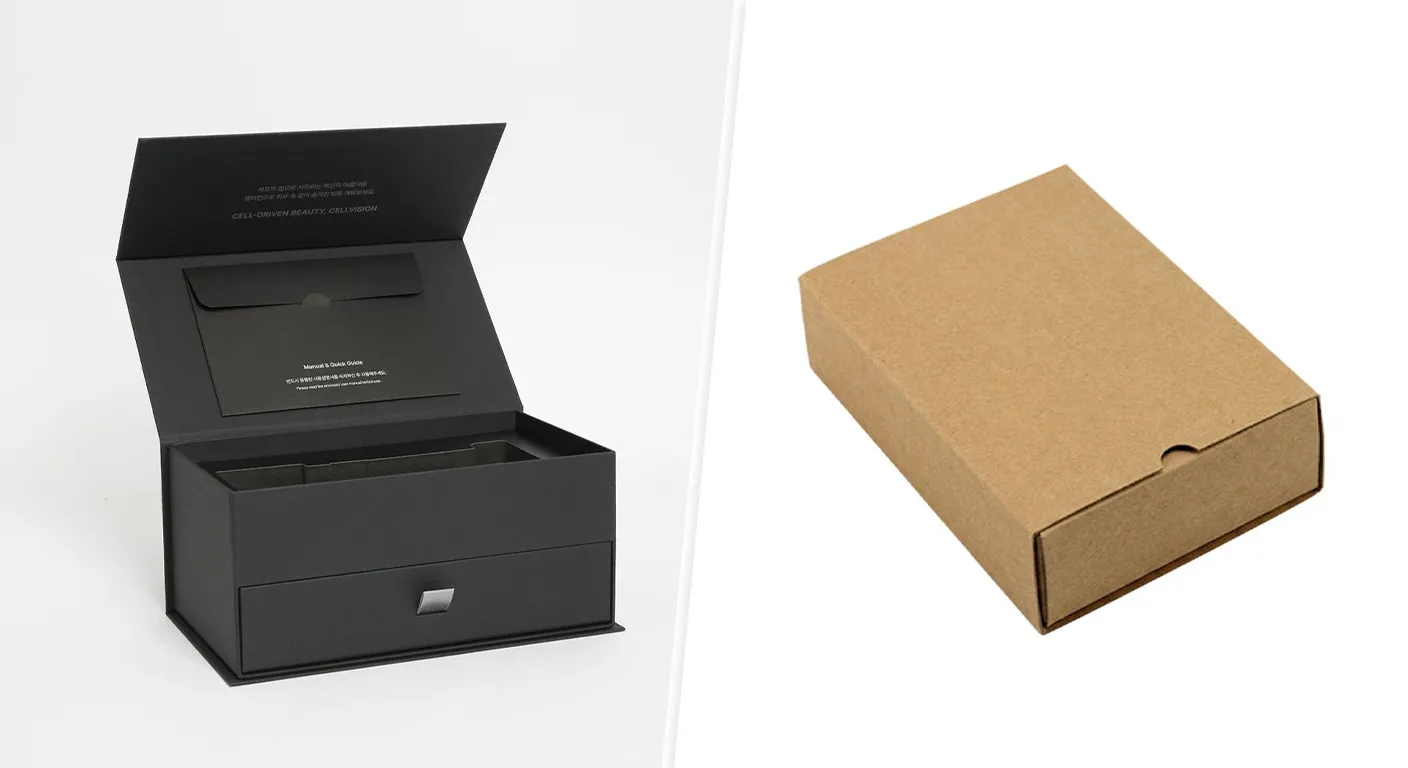
Building a successful ecommerce business is no longer just about finding products that sell. As competition continues to increase, more sellers are looking beyond traditional dropshipping and investing in branded dropshipping. While both business models allow entrepreneurs to sell products without managing inventory, they create very different customer experiences and long-term opportunities.
If you want to build a business that customers remember, choosing between branded dropshipping and traditional dropshipping is an important decision. This guide explains the differences, compares their advantages, and shares practical strategies to help you decide which model fits your ecommerce goals.
Branded dropshipping is a business model that combines the flexibility of dropshipping with the value of building a recognizable brand. Instead of selling products exactly as they arrive from suppliers, sellers customize different parts of the customer experience.
This may include:
The goal is not only to sell products but also to build customer trust and encourage repeat purchases.
Unlike generic online stores, branded stores create a stronger identity. Customers are more likely to remember the business, recommend it to others, and purchase again in the future.
Traditional dropshipping focuses on speed and simplicity. Sellers find products from suppliers, list them in an online store, and forward customer orders directly to the supplier after each sale.
The supplier handles:
This model requires very little upfront investment, making it popular among beginners.
However, many traditional dropshipping stores use the same supplier images, identical product descriptions, and similar pricing strategies. As a result, hundreds of stores may sell exactly the same products, making it difficult to stand out.
Although traditional dropshipping offers a fast way to launch an online store, long-term growth often becomes more challenging as competition increases.
Both models have advantages, but they serve different business goals.
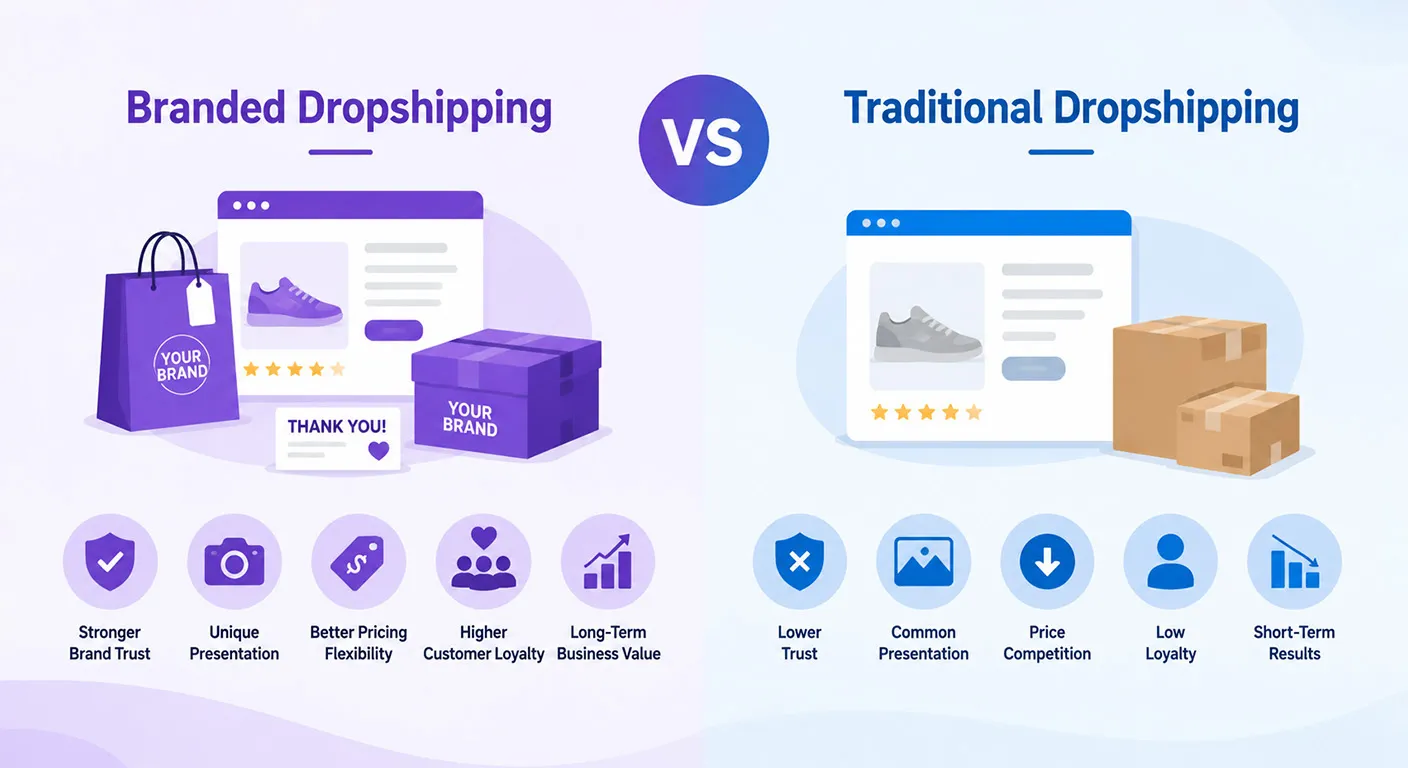
One of the biggest differences between branded dropshipping and traditional dropshipping is customer perception.
Traditional stores often rely on supplier content. Customers may see the same product images on multiple websites, reducing confidence in the store.
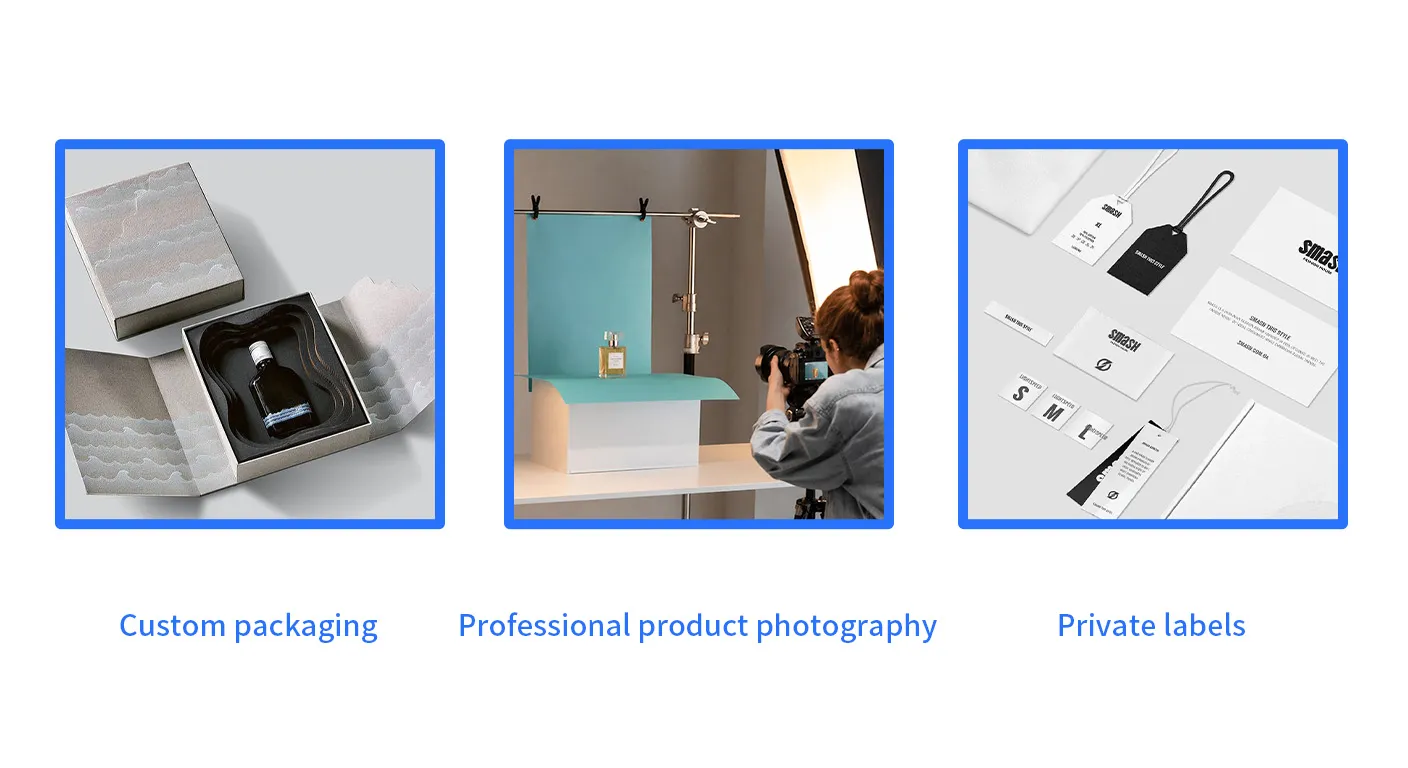
With branded dropshipping, sellers create original content that reflects their own business identity. Professional photography, custom packaging, and consistent branding make the store appear more reliable.
When customers trust a brand, they are generally more willing to complete a purchase.
Many ecommerce categories are highly competitive.
If several stores sell the same product at similar prices, customers often compare stores based on appearance and professionalism.
Branded dropshipping helps sellers differentiate products by offering:
Even when selling identical products, a stronger presentation can make one store more memorable than another.
Pricing is another important difference.
With traditional dropshipping, sellers usually compete on price because products look identical across many stores.
Lower prices may increase sales volume, but they also reduce profit margins.
Branded dropshipping allows businesses to focus on value instead of price alone.
Customers often accept slightly higher prices when they receive:
This creates healthier profit margins over time.
Many traditional dropshipping businesses struggle to generate repeat customers.
Shoppers remember the product but forget the store.
A branded dropshipping business creates a different experience.
Customers recognize:
These elements help build long-term customer relationships instead of one-time sales.
A traditional store often depends on continuously finding new winning products.
If one product stops selling, traffic and revenue may decline quickly.
With branded dropshipping, the business itself becomes an asset.
A recognizable brand can expand into:
This creates more stable growth over time.
Many sellers believe branded dropshipping requires a large budget. In reality, you can gradually build a brand while testing products.
Here are practical steps that many successful ecommerce businesses follow.
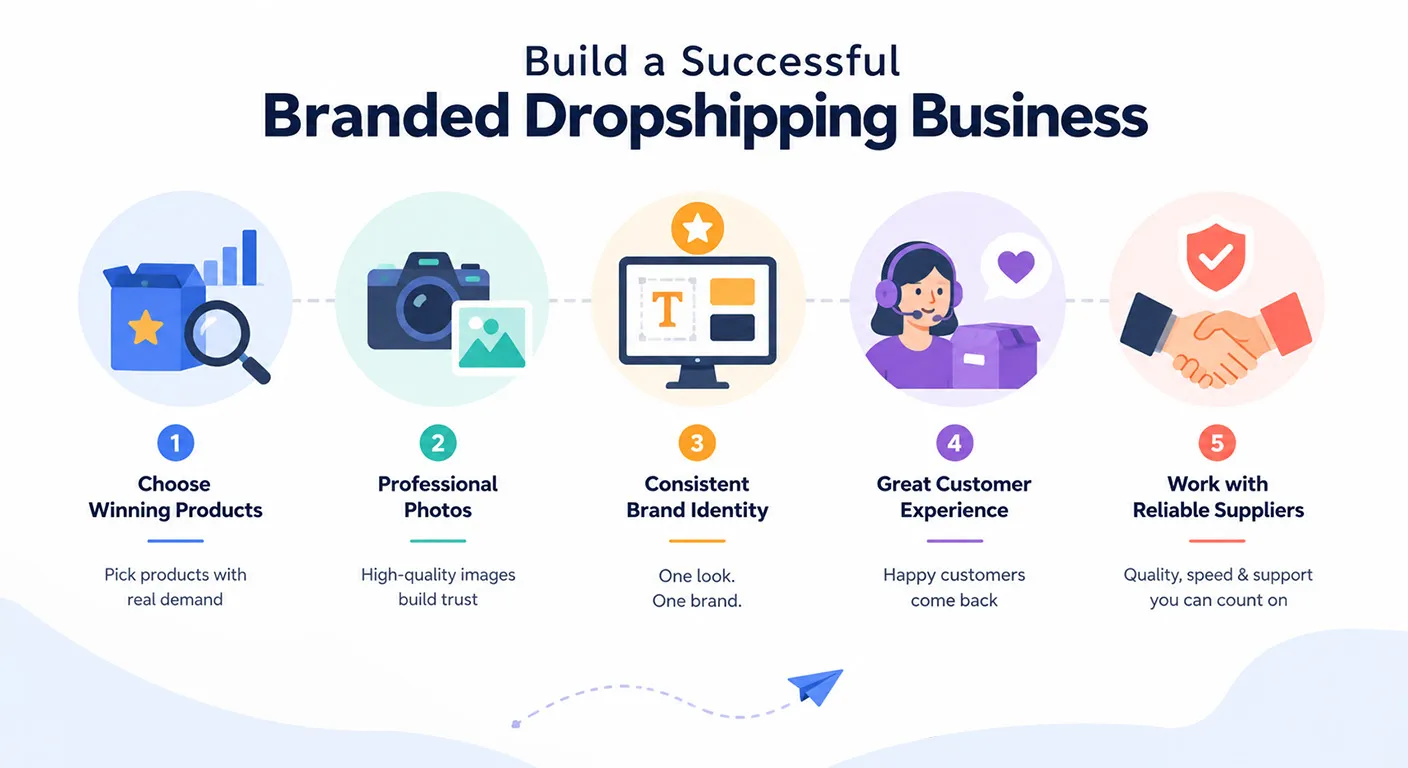
Branding cannot save a product that nobody wants.
Start by researching products with proven demand instead of selecting items based only on personal preference.
Look for products that:
Testing products first reduces risk and provides a stronger foundation for your brand.
One of the fastest ways to separate branded dropshipping from traditional dropshipping is improving product images.
Instead of using supplier photos, create original images that match your brand style.
Include multiple image types such as:
Professional photography makes products look more valuable and helps customers understand what they are buying.
A strong brand is much more than a logo.
Customers should experience the same visual style throughout your business.
Maintain consistency in:
Consistency makes your business look more professional and easier to remember.
Many sellers focus only on acquiring new customers.
Successful branded dropshipping businesses also invest in customer satisfaction.
Simple improvements include:
A positive shopping experience encourages repeat purchases and strengthens customer loyalty.
Choosing the right supplier is one of the most important steps in branded dropshipping. Even the strongest branding strategy cannot deliver long-term success if products arrive late, quality is inconsistent, or customer expectations are not met.
Unlike traditional dropshipping, where sellers often switch suppliers based only on price, branded dropshipping depends on building long-term relationships with reliable sourcing partners. A dependable supplier helps maintain consistent product quality, stable inventory, professional packaging, and efficient order fulfillment. These factors directly influence customer satisfaction and brand reputation.
When selecting a supplier, look for partners that can provide:
Working with fewer but more reliable suppliers also simplifies operations. Instead of spending time searching for new vendors every few weeks, you can focus on improving your marketing, optimizing product pages, and delivering a better shopping experience.
As your business grows, a strong supply chain becomes one of your biggest competitive advantages. Customers expect products to match the photos on your website, arrive on time, and maintain consistent quality. Meeting these expectations helps increase customer trust, generate positive reviews, and encourage repeat purchases.
Whether you are launching your first online store or upgrading from traditional dropshipping to branded dropshipping, choosing the right sourcing partner lays the foundation for long-term ecommerce success.
So, is branded dropshipping better than traditional dropshipping? The answer depends on your business goals.
If you want to launch a store quickly with minimal investment, traditional dropshipping is still a practical way to test products and learn the ecommerce market. However, if your goal is to build a business that customers trust, remember, and return to, branded dropshipping offers greater long-term potential. By combining reliable product sourcing, professional product photography, custom branding, and efficient fulfillment, you can create a shopping experience that stands out in a competitive market.
Building a successful brand does not happen overnight, but every improvement—from better product images to consistent packaging and dependable fulfillment—helps strengthen your business over time.
If you’re ready to take the next step, UploadToSell provides comprehensive support for ecommerce sellers looking to grow through branded dropshipping. From sourcing winning products and professional product photography to custom branding and order fulfillment, our team helps simplify the process so you can focus on building a stronger and more profitable ecommerce business. Whether you’re just getting started or scaling an existing store, UploadToSell can help turn your ideas into a trusted brand.