Phone:
+85295718875
Email:
support@just-wonders.com

Phone:
+85295718875
Email:
support@just-wonders.com
Branded shipping boxes can serve more than one product. Keep a shared store identity while preserving accurate product information and suitable protection.
You do not necessarily need a separately printed outer box for every product in your store. Branded shipping boxes can use a common design when the branding applies to the whole range, each packed product fits suitably and the correct product information still reaches the customer. Sharing the design does not mean removing product labels or using the largest box for everything. It means keeping the store identity common while allowing the contents and their requirements to differ.
For a dropshipping seller, that can make a growing range easier to present without commissioning a completely new printed package for every addition. UTS’s branding and packaging service covers boxes, mailers, labels, inserts and coordinated design, sampling and production. Describe the products you want covered and the appearance customers should receive; the team assesses and executes the packaging work commissioned. A shared look for branded shipping boxes is a proposal to assess across those products, rather than a promise that one physical size will suit all of them.
A store name, logo and undated thank-you message can remain relevant when the item inside changes. A printed product name, capacity, color or contents list may not. This is the useful dividing line when discussing a common design: which wording describes your business, and which product information describes only one purchase? Branded shipping boxes that name a particular item should not quietly be used for another simply because both belong to your store.
The outer parcel and the product’s own packaging have different jobs. Shopify’s product packaging design guide distinguishes shipping boxes and mailers from inner boxes, sleeves and pouches. That leaves room for a common store identity outside and relevant product information on the appropriate inner package or accompanying material. It does not mean an insert can replace information required on the product or its packaging. The applicable product and destination requirements still determine what must appear and where.
A carrier address label is not a substitute for product information. Nor does a logo sticker explain a different size, version or included accessory. If existing supplier labels combine promotional branding with necessary details, ask UTS to clarify a suitable retained or replacement presentation. Do not request blanket removal merely to make branded shipping boxes look consistent. Our article on neutral packaging explains that separate distinction between unwanted promotion, product identity and necessary documents.
Two products can have a similar outline and need different protection. A soft pouch can tolerate an arrangement that leaves a fragile projecting part exposed. The product information for a set may name an accessory that needs its own space, even when its main item is unchanged. Branded shipping boxes should therefore be assessed with the actual proposed contents and protection, rather than matched only to a storefront photograph. The seller describes the items and presentation; the provider handles the packing assessment and agreed preparation.
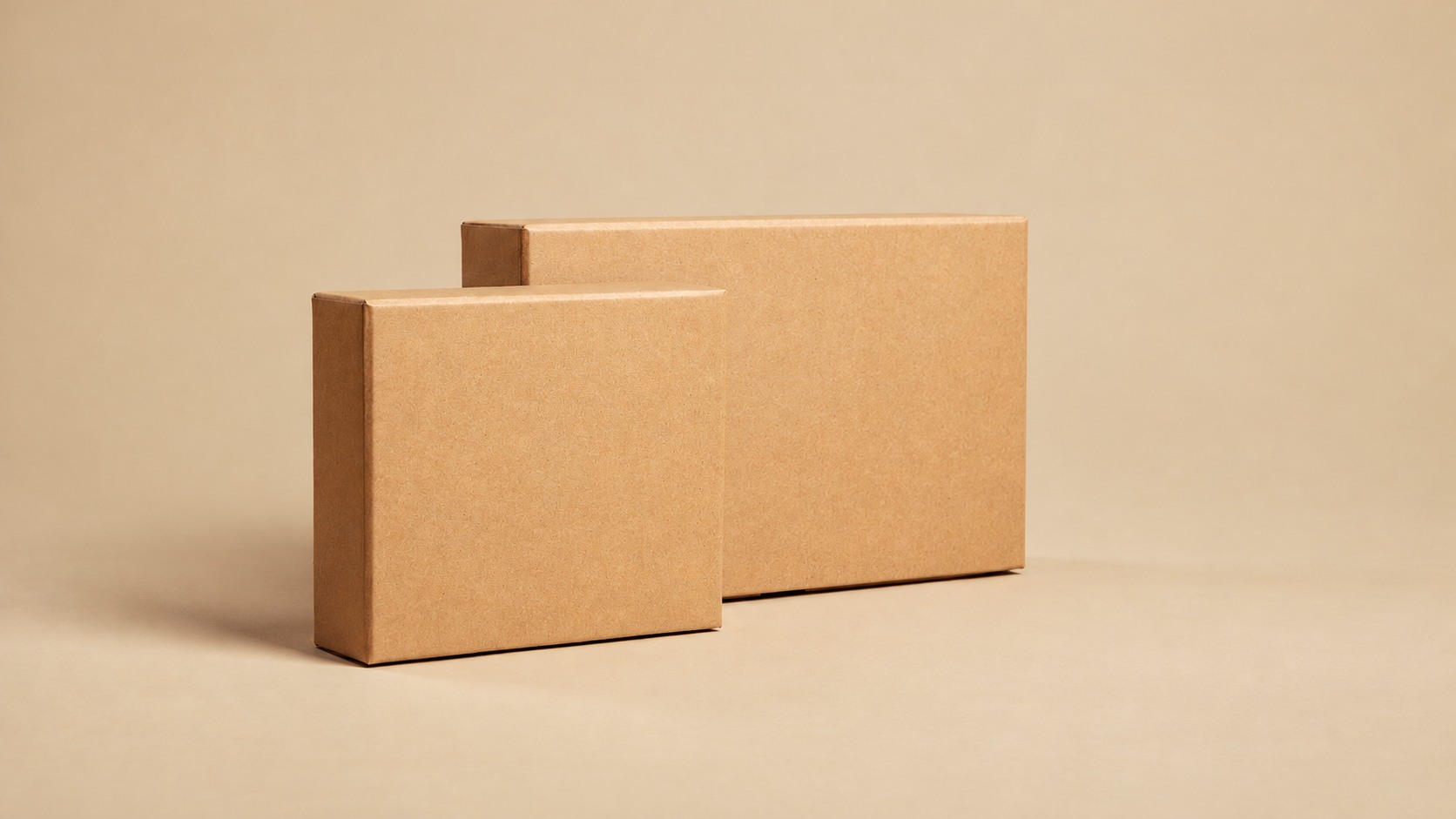
Branded shipping boxes can carry a common graphic design in more than one suitable size. That may preserve the visual identity without making every small order travel in a box chosen for the largest item. Conversely, shrinking the package by removing necessary support does not solve the fit problem. Ask for suitable options for the different contents, including any inner retail package you want retained. The existing boxes pictured earlier illustrate a shared appearance across sizes; their appearance alone establishes no shipping performance.
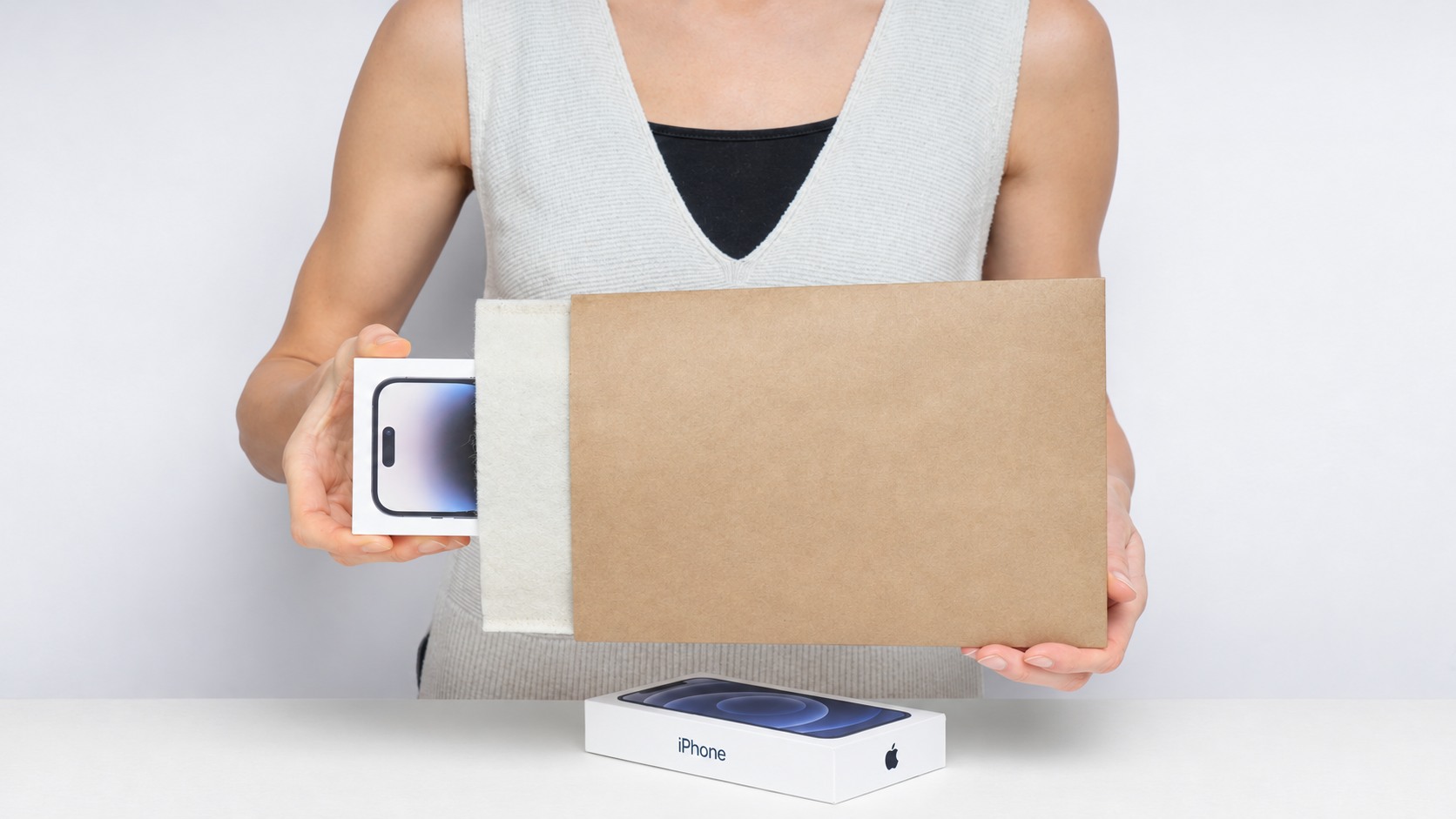
Keep changes to the contents visible in the proposal. Updated product information might describe a larger version or an additional piece, both of which can change the complete packed arrangement. An unchanged outer design does not establish that the new contents are covered by the old recommendation. A protective envelope around a retail box illustrates two separate layers; it is not a recommendation for every product or evidence that a particular parcel has passed transport testing. Branded shipping boxes likewise need a supported arrangement for the items they will actually carry.
A product addition need not change every printed component. The common outer design may remain useful while the item label, instructions or inner support changes. A store-wide card can stay where its message still applies, while a card describing a specific model must follow that model. Treat branded shipping boxes as one part of the finished presentation, rather than assuming that matching outsides require identical contents or paperwork. Product information should remain accurate even when the customer sees a familiar parcel.
The reverse matters when an item leaves the range. Boxes printed only with the store’s identity may have another suitable use; outdated product information about a discontinued item, bundle or seasonal offer narrows that use. A common design can avoid tying every empty box to one item, but it cannot guarantee that leftover materials remain usable. Dimensions, condition, wording and the actual next product still matter. Do not treat a new label as automatic permission to cover an unsuitable statement or required detail.
Finally, a shared design is different from a shared production minimum. Printing the same graphics on different sizes can still involve separate production requirements, and an accepted box order does not include every label or protective component by default. Ask UTS to identify the suitable product coverage and any size-specific requirements in the project proposal for branded shipping boxes. Packaging can be commissioned separately from purchasing or fulfillment. The useful result is a common identity on the parcels that suit it, with the right details and protection retained for each product.