Phone:
+85295718875
Email:
support@just-wonders.com

Phone:
+85295718875
Email:
support@just-wonders.com
Understand neutral packaging for dropshipping: distinguish supplier promotions, product labels and shipping documents, then agree what customers will receive.
Neutral packaging usually means a customer parcel without another seller’s promotional identity. It does not automatically mean an unbranded product, an empty label or a shipment without documents. A plain outer bag can still contain a branded retail box, a discount card or a seal bearing another company’s name. The useful question is what the customer will see when opening the complete package.
For a dropshipping seller who does not handle the goods, neutral packaging is a result to request from the team preparing the order. Explain which supplier branding you want excluded and which product you are selling. UTS handles the commissioned supplier coordination and packing work; you describe the desired customer experience and confirm the proposed scope. Feasibility depends on the actual item and packaging, rather than the word ‘neutral’ alone.
Promotional identity can appear on wrapping, a closure sticker, a gift sleeve or a card inviting the customer to another store. None requires a printed outer carton. In the parcel illustration, the brown paper looks plain, but the wax seal carries a mark. That distinction matters when neutral packaging is intended to remove another seller’s promotion rather than simply change the color of the mailer.
Describe supplier branding by its role and location. A retailer’s discount leaflet is different from the name printed on the item itself. ‘No third-party promotional cards or branded parcel seals’ communicates a clearer result than ‘remove every name.’ If you have received an example parcel, photographs can show the unwanted pieces without requiring you to write instructions for warehouse staff.

UTS can discuss the requested packaging outcome with the supplier and the team preparing the goods. The proposed arrangement should identify what can be omitted, replaced or retained. An easily separated promotional card presents a different request from a logo printed across a protective retail box. Neutral packaging is not confirmation that every existing component can be changed without affecting the product or its protection.
The same request may not fit every item in your range. Supplier branding on one product’s outer sleeve might be absent from another, or incorporated into a sealed presentation box. Specify the products and variants covered by the request so the agreed result does not depend on an assumption that all supplier packaging looks alike. You confirm the coverage; the service team handles the corresponding preparation.
A brand on the product may identify the product you are actually offering. Taking away a promotional insert does not turn that item into a white-label product or establish that it can carry your own brand. If you want the goods themselves to be unbranded, raise that as a separate product requirement. Neutral packaging can change the surrounding presentation while the original product identity remains visible.
Nor is every company name supplier branding in the promotional sense. Manufacturer or importer details, product references and safety information can serve identification and traceability purposes. The bottle illustration separates the product label from the parcel around it; it is an appearance example, not evidence of a compliant label. A plain bottle or blank panel does not establish what information a particular product needs.

As a specific regional example, UK government product-safety guidance says that the product or packaging should include the manufacturer’s name and address, the importer’s if there is one, and a product or batch reference to support traceability. It also addresses information about product risks. This is a UK example, not one labeling rule for every destination or product. Neutral packaging must be considered alongside the requirements applicable to the actual goods and market.
If the unwanted supplier branding shares a label with important product information, the question is whether a suitable alternative is available, not whether everything can simply be peeled off. Give UTS the product reference, destination and intended appearance. The team can clarify the supplier-side options and any points requiring further confirmation. Do not interpret a packaging proposal as permission to remove required information or change the stated manufacturer.
Adding your own identity is also a separate decision from neutral packaging. A product may travel in plain packaging without carrying your store’s logo, or use an agreed insert while retaining its original label. If you later change your own branding, our article on a packaging update after a logo change explains the different question of which existing branded pieces should change and which can still be used.
An advertising card inside the box, a customer-facing receipt and a document used for transport or clearance have different jobs. Neutral packaging should specify the unwanted customer-facing content without treating every document as advertising. If your concern is that a customer may see another seller’s price or contact details, say that directly and ask what paperwork accompanies the proposed shipment.
A request to exclude supplier branding does not establish that an invoice can be discarded, that a declared value can be changed or that sender information will disappear from a carrier label. The applicable documents depend on the shipment and service. Their appearance and purpose need separate confirmation; a plain parcel is not a promise that every external field will display your store’s name.
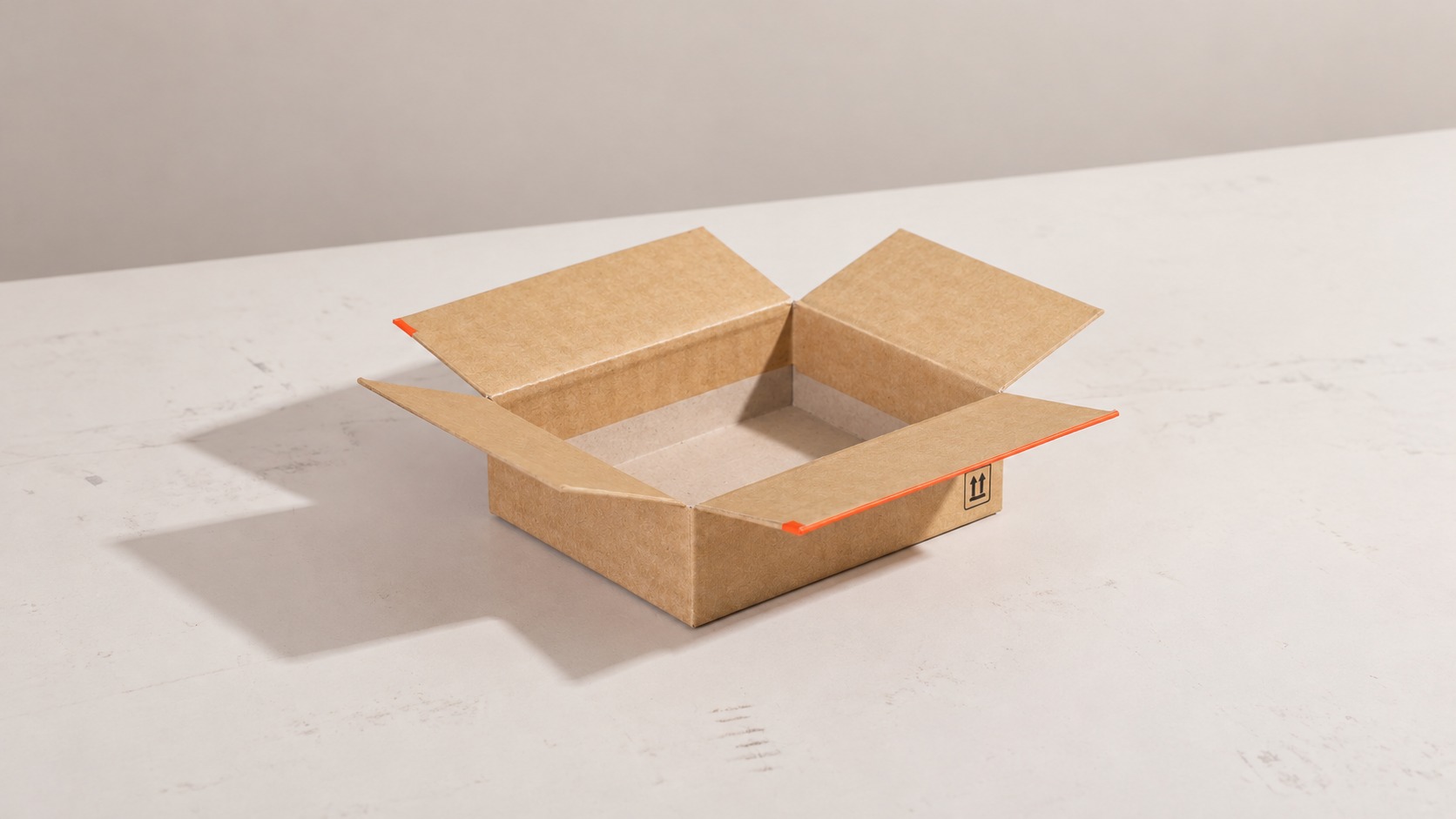
Protection is another reason to avoid a blanket ‘remove everything’ request. An inner tray, cushioning or handling mark can be useful even when it has no promotional role. The open carton illustration includes upward-pointing handling arrows. Such marks are different from supplier branding, and their presence does not by itself contradict a request for a parcel without third-party promotion.
Neutral packaging still needs to suit the complete product being sent. Removing a retail box may also remove the support that holds a fragile item or its accessories in place. UTS should clarify the proposed packing arrangement as part of the commissioned work, rather than leave you to devise a replacement. Our ceramic mug packaging article explains why a retail box and the complete protective shipping package are different things.
A useful neutral packaging request identifies the items, the unwanted promotional pieces and the information or protection that needs to remain. An example of the desired finished parcel can help explain the appearance. You do not need to select packing materials, supervise supplier staff or create a packing procedure; the provider proposes and executes the agreed arrangement.
Ask the proposal to distinguish removal of supplier branding from replacement packaging, changes to the product itself and preparation of order documents. If a particular mark must remain, understand where the customer will see it before agreeing to the service. A packaging-only request is possible; supplier purchasing, order preparation and transport are separate services to confirm according to what you need.
UTS’s fulfillment service describes order preparation and branded packing options. Those options do not establish a universal ability to erase supplier branding or replace all labels. Send the product link or reference, photographs of the current packaging if available, the destination and the customer-visible result you want. UTS can then discuss the feasible neutral packaging scope, applicable products and project-specific charges and timing with you.