Phone:
+85295718875
Email:
support@just-wonders.com

Phone:
+85295718875
Email:
support@just-wonders.com

Running a successful ecommerce business involves much more than finding winning products and increasing sales. Many sellers focus on marketing, product sourcing, and customer acquisition but overlook one of the most important parts of long-term success—dropshipping accounting. Without accurate financial records, it becomes difficult to understand whether a business is truly profitable or simply generating revenue.
As the ecommerce industry becomes more competitive, professional ecommerce accounting is no longer optional. It helps sellers organize product costs, shipping expenses, advertising budgets, profits, and cash flow so they can make smarter business decisions. Whether you are running a new Shopify store or managing an established ecommerce brand, having a clear accounting process is essential for sustainable growth.
In this guide, we’ll explain why dropshipping accounting matters, what every seller should track, common mistakes to avoid, and how professional accounting support can help your ecommerce business grow more efficiently.
Dropshipping accounting refers to the process of recording, organizing, and analyzing all financial activities related to a dropshipping business. Unlike traditional retail accounting, dropshipping accounting focuses on managing supplier payments, shipping costs, advertising expenses, order income, and overall profitability without holding inventory.
Many ecommerce sellers believe accounting is only necessary for tax purposes. In reality, good accounting provides valuable insights into daily business performance. It allows sellers to understand where money is being spent, which products generate the highest profits, and how cash flows through the business.
Professional ecommerce accounting usually includes:
Instead of relying on estimates, sellers can make decisions based on accurate financial data.
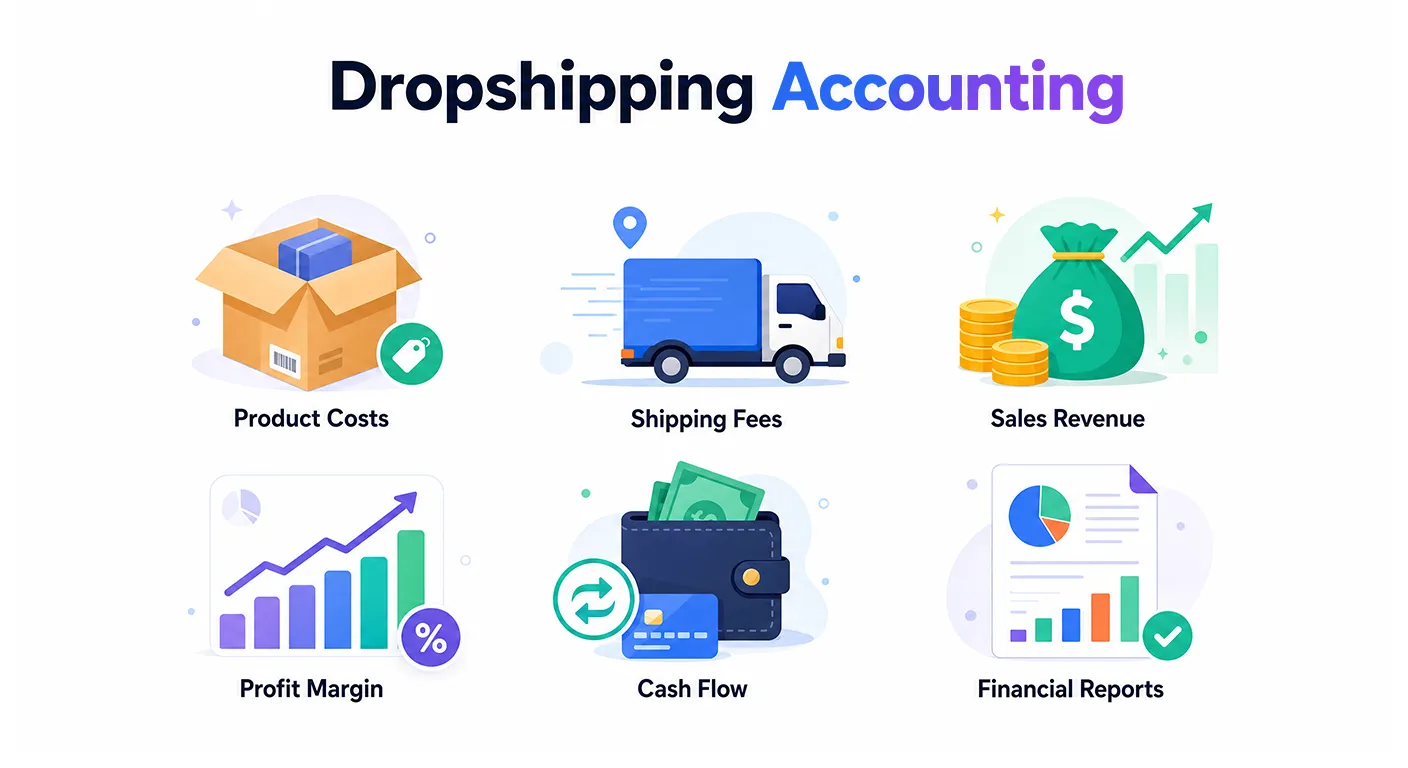
Many sellers celebrate high sales numbers without realizing their actual profits are much lower.
For example, a store generating $20,000 in monthly sales may appear successful. However, after deducting product costs, shipping fees, advertising expenses, transaction fees, and refunds, the final profit could be much smaller.
Effective dropshipping accounting helps sellers calculate real profit rather than focusing only on revenue.
By understanding actual profitability, business owners can:
Understanding profit is the foundation of sustainable ecommerce growth.
A growing ecommerce business involves many financial transactions every day.
These may include:
Without organized ecommerce accounting, it becomes difficult to know exactly where money is going.
Accurate financial records provide greater visibility into business operations and help sellers make informed decisions instead of relying on assumptions.
Business decisions should always be based on reliable data.
Professional dropshipping accounting allows sellers to answer important questions such as:
These insights help sellers allocate resources more effectively and improve long-term performance.
Product cost is one of the most important financial metrics.
This includes:
Tracking product costs accurately helps sellers calculate realistic profit margins and adjust pricing strategies when necessary.
Shipping costs directly influence customer satisfaction and profitability.
Sellers should monitor:
Keeping shipping records organized helps identify opportunities to reduce operational costs.
Marketing often represents one of the largest expenses for ecommerce businesses.
Whether using:
Every campaign should be tracked carefully.
Good ecommerce accounting helps compare advertising costs with actual sales performance, allowing sellers to optimize marketing budgets.
Revenue tracking involves more than recording total sales.
Business owners should monitor:
This information provides a clearer picture of business performance over time.
Many profitable businesses experience cash flow problems because incoming and outgoing payments are not properly managed.
Healthy cash flow ensures sellers can:
Managing cash flow effectively reduces financial pressure and supports business stability.
Many new entrepreneurs use one bank account for both personal and business expenses.
This creates confusion when reviewing financial records.
Separating business finances makes accounting much simpler and improves reporting accuracy.
Small expenses may seem insignificant individually, but together they can significantly reduce profits.
Examples include:
Professional dropshipping accounting helps ensure every expense is properly recorded.
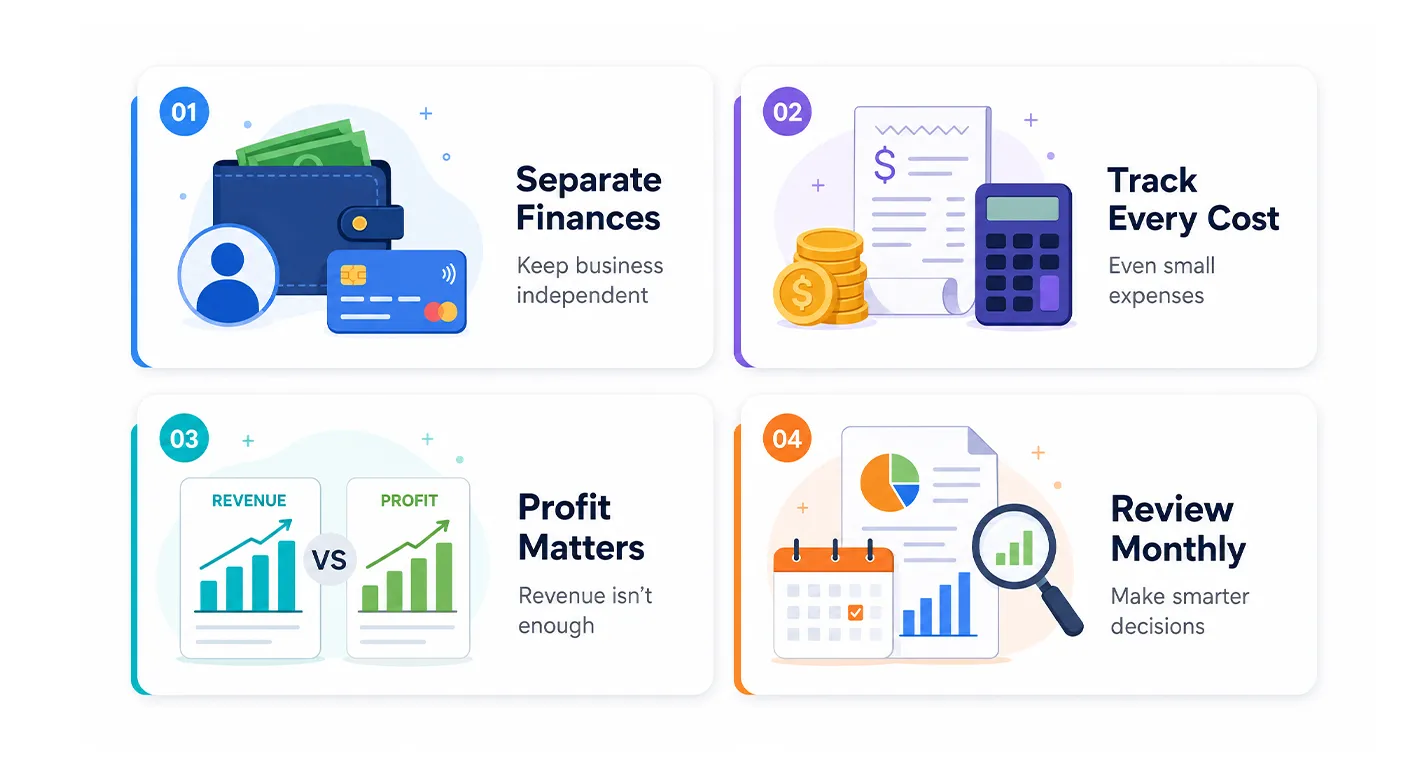
Revenue alone does not indicate business success.
A store with higher revenue but lower profit is not necessarily performing better than one with lower revenue and higher margins.
Successful ecommerce sellers always evaluate both revenue and profitability.
Accounting should not only be completed at tax time.
Regular financial reviews help sellers:
Monthly financial reviews allow businesses to make adjustments before small issues become major challenges.
Accurate financial records help businesses create realistic budgets.
Instead of guessing future expenses, sellers can use historical data to plan:
Better planning reduces unnecessary spending and improves financial stability.
Not every popular product generates strong profits.
Professional dropshipping accounting helps identify:
These insights help sellers build stronger product portfolios.
As order volume increases, financial management becomes more complex.
Organized accounting systems support business expansion by providing accurate information needed for hiring staff, expanding product lines, entering new markets, or increasing marketing investments.
Growth becomes much easier when financial data is reliable.
Update business records consistently rather than waiting until the end of each month.
Frequent updates improve accuracy and reduce errors.
Review profit margins regularly to ensure pricing remains competitive while maintaining healthy profits.
Changes in supplier pricing or shipping costs should be reflected quickly.
Every business expense should be recorded, regardless of size.
Complete financial records provide a more accurate picture of business performance.

Cash flow should be monitored every week.
Positive cash flow allows businesses to operate smoothly and prepare for future growth opportunities.
Managing ecommerce finances takes time and attention to detail. As your business grows, organizing financial information becomes increasingly important.
UploadToSell provides accounting support designed specifically for ecommerce sellers and dropshipping businesses.
Our accounting service helps organize:
With clearer financial records, sellers can better understand business performance, identify opportunities for improvement, and make informed decisions as their stores continue to grow.
Combined with our product sourcing, product photography, branding, fulfillment, and Shop VA services, UploadToSell provides an integrated solution that supports every stage of your ecommerce business.
Instead of spending valuable time organizing spreadsheets and financial records, you can focus on finding winning products, improving your store, and serving your customers.
Building a successful ecommerce business requires more than increasing sales. Long-term growth depends on understanding your finances, controlling costs, and making informed decisions based on accurate data.
Professional dropshipping accounting gives sellers the visibility needed to improve profitability, manage cash flow, and build stronger businesses. At the same time, reliable ecommerce accounting provides the financial foundation necessary for sustainable expansion in today’s competitive market.
Whether you are just starting your first online store or scaling an established ecommerce brand, investing in organized accounting is one of the smartest decisions you can make.
If you’re looking for more than basic bookkeeping, UploadToSell offers comprehensive support that combines product sourcing, fulfillment, branding, operations, and accounting services into one complete ecommerce solution. Our goal is to help sellers simplify business management, improve operational efficiency, and focus on long-term growth.
Dropshipping accounting is the process of tracking and organizing financial activities such as product costs, shipping expenses, sales revenue, profits, and cash flow for a dropshipping business.
Ecommerce accounting helps business owners understand their financial performance, manage expenses, improve profitability, and make informed decisions based on accurate financial data.
Every seller should record product costs, shipping expenses, advertising costs, sales revenue, refunds, operating expenses, profit margins, and cash flow.
Financial records should be updated regularly, and most businesses benefit from reviewing their accounting reports monthly to monitor profitability and identify trends.
Yes. UploadToSell provides accounting support that helps organize product costs, shipping expenses, order income, profits, and cash flow. Combined with sourcing, branding, fulfillment, and operational services, we help ecommerce sellers build more efficient and sustainable businesses.