Phone:
+85295718875
Email:
support@just-wonders.com

Phone:
+85295718875
Email:
support@just-wonders.com
Source gold plated jewelry with clear material details. Separate base metal, plating thickness and vermeil from appearance and unsupported wear claims.
A supplier offers the gold-colored necklace you want for your store. The heading says ‘18K,’ the description says ‘plated,’ and the sample looks convincing. Before buying gold plated jewelry, establish what those words describe: the metal underneath, the surface coating, or simply the color. A photograph cannot resolve that distinction.
For a dropshipping seller, the useful result is a product specification that supports the description customers will read. You do not need to become a plating technician. You need your supplier or purchasing partner to identify the selected construction, explain the material claim, and flag what remains unverified before that claim reaches your listing.
Gold plating puts a gold or gold-alloy layer on another material. The base metal is the material beneath that layer. A gold-colored finish alone does not establish that the coating contains gold, and an ‘18K’ description of a coating does not mean the whole necklace is 18-karat gold. Ask which part of the product the supplier’s wording refers to.
The distinction matters when you compare two visually similar offers. One may specify gold plating over brass; another may specify it over stainless steel or sterling silver. Those descriptions identify different constructions, even when the front-facing photographs look alike. Do not substitute one for another because both options are named ‘gold’ in the supplier’s menu.
The US jewelry guides on gold content distinguish an article’s gold composition from surface plating and address misleading descriptions of fineness, thickness and application. That is a useful reason to request precise wording. It is not evidence that a particular supplier’s item complies, and other markets may require different descriptions.
Look at what a product photo actually gives you: visible shape, finish, joins and surface detail. It does not reveal the metal below an intact coating. Our guide to reflective product photography explains why lighting and surrounding surfaces affect the way shiny products appear. Use better photography to show the item accurately, while keeping composition evidence separate.
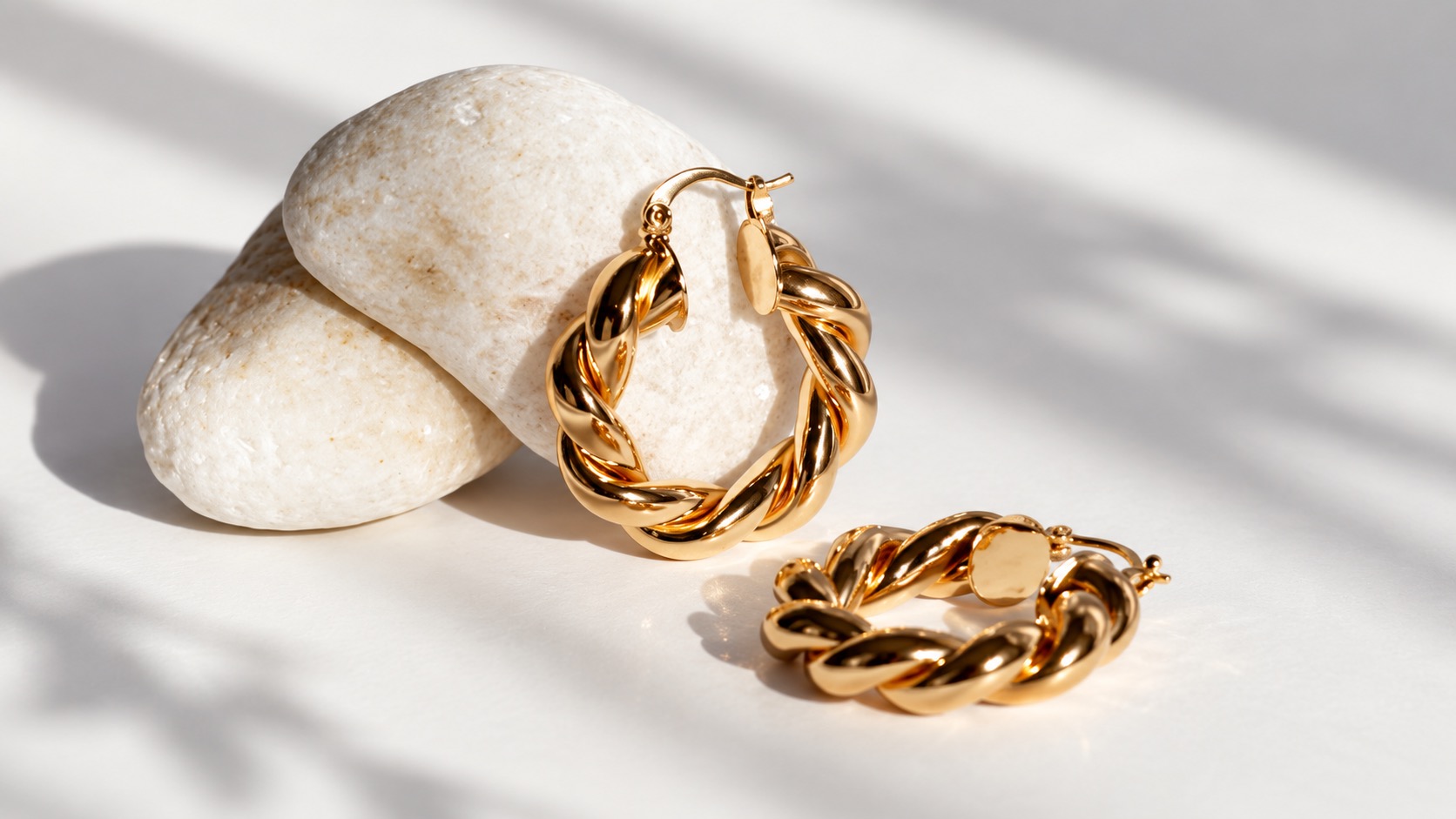
A description of the main chain may leave the clasp, extension chain, jump rings and pendant unspecified. An earring may have a different construction at its post or closure. Ask whether the material statement covers the complete item or only its prominent part; the small component still belongs to the product your customer wears.
A useful supplier response names the selected style and variant, then identifies the base metal and coating for the relevant components. If all parts share the same specification, get that confirmed. If they differ, preserve the distinction instead of shortening the description into a single broad metal label. A document for another style is not a substitute merely because its finish looks similar.
This also clarifies supplier comparisons. ‘Same design’ can mean the same silhouette while the chain, fastening or material has changed. Give your purchasing partner the material requirement that matters, not only a screenshot. If a supplier proposes another construction, you can consider it as a separate offer before anyone treats it as an interchangeable replacement.
A physical sample helps you see the finish and work the closure. Those observations are useful, but they do not establish metal composition or guarantee a reaction-free wearing experience. Claims such as ‘hypoallergenic’ need an appropriate basis for the actual item; a gold color, a comfortable sample or a general supplier assurance cannot settle them.
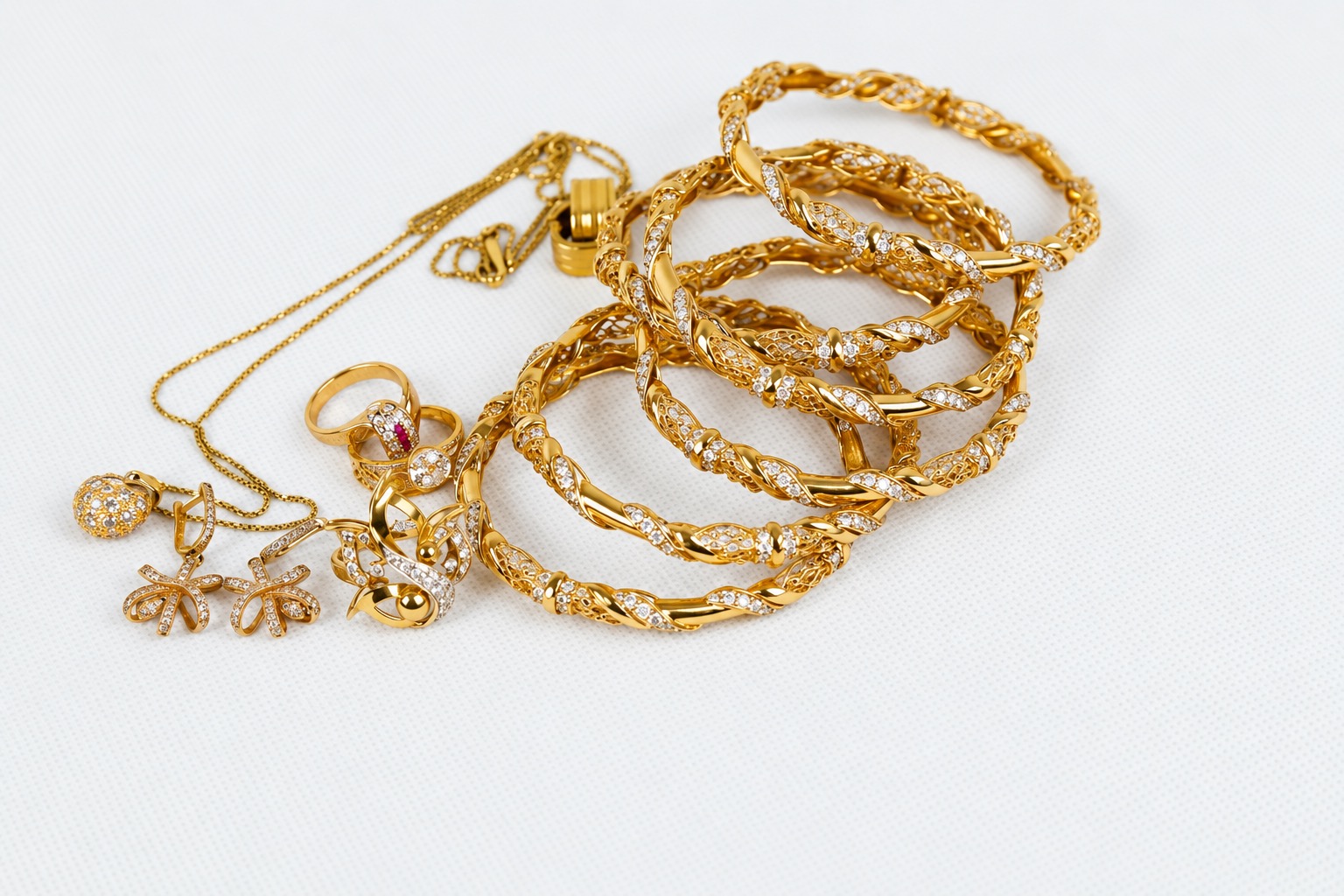
Plating thickness describes how much coating lies over the surface. Karat fineness describes the gold content of a gold alloy. They are different properties: a higher karat description does not, by itself, tell you that the coating is thicker or will remain unchanged for longer.
If thickness is part of the offer, ask for the unit, the component and surfaces covered, and how the figure was established. Find out whether it is a target specification or a measurement of identified goods. Do not treat a number in a catalog as a test result for your sample, or compare two figures until you know they describe the same thing.
Gold vermeil adds another distinction. Under the US jewelry guide for vermeil, the term involves a sterling-silver base and specified gold fineness, coverage, durability and minimum thickness. It is not a general synonym for every gold-plated item. A supplier offering a brass base has not described vermeil simply by using a more luxurious name for its gold finish.
Even a clear construction description is not an unconditional lifetime promise. ‘Waterproof,’ ‘tarnish-free’ and ‘lasts for years’ add claims about use and performance. Ask what evidence supports the exact statement, for which product version and under which conditions. An undamaged sample at arrival cannot demonstrate how its finish will behave through repeated wear.
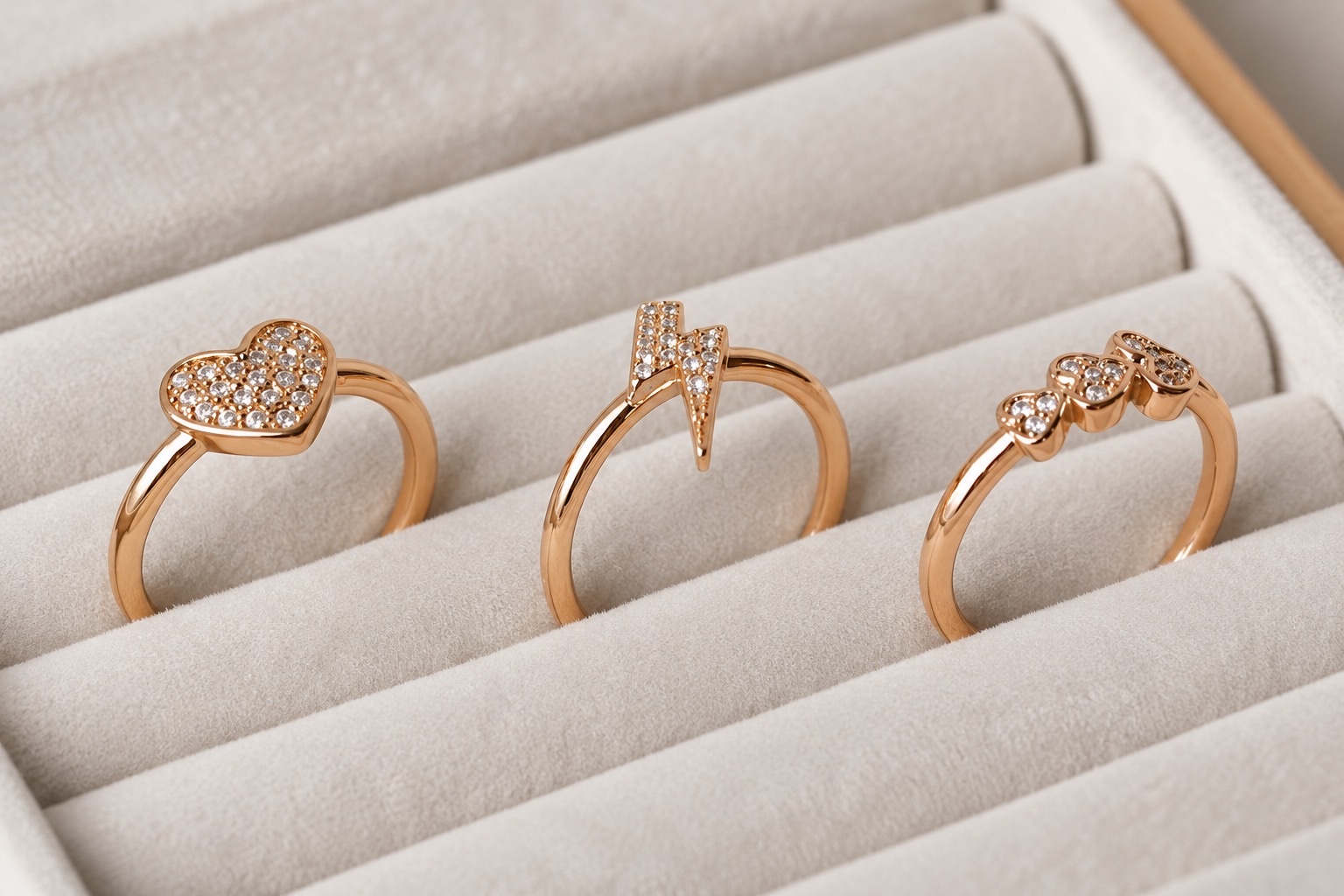
You can like the sample’s appearance while still waiting for material information. Keep those decisions separate. If the supplier cannot identify the construction, pause the material claim rather than filling the gap with wording copied from a competing store. If the material is identified but wear evidence is limited, avoid adding a stronger durability promise to make the listing sound more attractive.
Care guidance should describe the supplied item and any relevant restrictions. It should not quietly contradict a headline promising unrestricted use. Ask the supplier to resolve that mismatch before approving customer-facing copy. Where a claim requires specialist assessment, confirm the method and scope with a suitable provider; an appearance check is a different service.
UTS can coordinate supplier inquiries and purchasing through its China purchasing service, or provide product photography and detail shots for the work you commission. Confirm any material verification or specialist testing separately. Neither an attractive photo nor routine receiving checks should be presented as proof of coating thickness, chemical composition or long-term wear performance.
Send the product link, chosen variant, destination and the material or wearing statement you want clarified. You remain responsible for what your store promises; UTS handles the purchasing or photography work agreed with you. You can commission either service on its own, then discuss the missing evidence, suitable scope and a quote for that specific need.