Phone:
+85295718875
Email:
support@just-wonders.com
Phone:
+85295718875
Email:
support@just-wonders.com
Before buying Halloween inventory, confirm the exact variant, available stock, final packaging and shipping suitability. Use this practical checklist to decide what to proceed with and what to put on hold.
A Halloween product can look perfect in an advertisement and still be a poor sourcing choice. The selected variant may be unavailable, the protective packaging may change the shipping cost, or the product’s power source may need a different delivery service.
Before you commit to stock or launch a campaign, confirm three things: what you are buying, how it will be packed, and whether the proposed fulfillment route works for that exact item. This Halloween product sourcing checklist helps ecommerce sellers turn an attractive product idea into a purchasing decision, whether they are testing a first product or preparing a larger seasonal range.
Start with one clearly identified version of the product. Similar photos can represent different sizes, materials or pack quantities. A pumpkin listing might offer a single ornament, a set of three, or a light-up version; the lowest displayed price does not tell you which one your customer will receive.
Record the supplier link, selected variant, material, product dimensions, color, pieces per set and included accessories. For powered products, include the power source and whether batteries are supplied. Ask the supplier to confirm that the quote, sample and photos all refer to that same specification.
For example, a hanging ghost decoration needs more than a height measurement. Does the stated height include the hanging cord? Are hooks or fixing pieces included? Does the fabric arrive folded, and can it regain the appearance shown in the listing? These are questions to resolve before using the supplier’s images in your store.
If you need a physical check, use a sample to verify the actual version rather than a visually similar alternative. Our guide to using dropshipping product samples explains how samples can support product evaluation.
Ask what is physically available now and what still needs production. Check the minimum purchase quantity for each color or size, not just the minimum shown for the whole listing. A mixed order and a single-variant order may have different conditions.
Separate the sample arrangement, first purchasing batch and repeat-order arrangement. Confirm when the supplier expects the selected goods to be ready for handover, what could change that date, and whether any substitution requires your approval. A marketplace stock counter is not a reservation for your business.
For a small test, begin with a manageable number of variants and an agreed way to reorder. Expanding a range before the original specification is stable creates more opportunities for mismatched photos, incorrect picking and unavailable options. Testing should reduce uncertainty, not just reduce the first invoice.
Measure the product, its retail packaging and the final customer shipping parcel separately. Obtain the external dimensions and gross weight of the final shipping package, including agreed protection. Large lightweight parcels can be priced differently from compact parcels of the same actual weight; the calculation depends on the selected service.
A rigid pumpkin ornament may need cushioning and an outer carton. A fabric decoration may pack more compactly, but its hanging parts and presentation still need checking. Do not assume that either item is ready to dispatch simply because the supplier provides a box.
Ask whether the warehouse can ship one unit in its original packaging. If goods arrive in a carton containing several units, confirm how each customer order will be separated and packed, who provides those materials, and what the work costs. A lower inbound freight cost can be offset by extra packing work later.

Describe the actual product to your logistics provider, rather than calling every item a “Halloween decoration.” A fabric ornament, a fragile ornament and a light-up decoration can require different checks.
For lighting products, establish the exact power source, battery type and whether batteries are included or installed; confirm plug and voltage details where applicable. Ask the provider to verify acceptance and any required documentation for that configuration and destination before choosing a route.
For costumes, children’s items and other products with safety considerations, verify the intended use, materials, intended age group and applicable requirements for the destination market. Supplier documents should match the actual product; a badge in a listing is not enough. Avoid copying unsupported claims such as “child-safe,” “non-toxic” or “fireproof.”
Also check permission to use designs, characters, logos and supplier images. Seasonal demand is not a reason to overlook intellectual property or product safety. This checklist is a sourcing aid, not a compliance certification or confirmation that a particular item can be shipped.
Compare quotations using the same product version, quantity, packaging and destination. Ask each provider to identify what is included and what remains separate: product cost, protective materials, preparation, transportation, applicable import charges, and warehouse receiving, storage or fulfillment where relevant.
Do not add an allowance blindly or count the same service twice. Mark unconfirmed charges as open questions instead of entering zero. Then assess whether the expected selling price leaves room for advertising, payment fees and a realistic allowance for returns or damage.
Timing is part of that decision. Obtain an estimate covering supplier preparation and the relevant transport and warehouse steps, not just one leg of the journey. If a route no longer fits the customer’s intended use date, a lower freight cost alone does not make it suitable. There is no single Halloween ordering deadline that works for every product and market.
Use the following illustrative cases to make the remaining questions visible. They are examples, not a list of confirmed bestsellers or products held in UTS stock.
“Proceed” means you have enough confirmed information to make your own commercial decision. It is not a guarantee of sales, regulatory compliance or on-time delivery. Keep the agreed specification, sample findings and quotation together so later changes are easy to spot.
You do not need a long presentation to start a discussion. Send the following details together:
Comparing Halloween products? Message UploadToSell on WhatsApp to discuss your product links, preferred variants and destination. If you are still testing, tell us what is not yet decided so the conversation can focus on the next useful check. Product availability, service suitability and quotations require confirmation.
You can also browse our Winner Products for ideas, or read our supplier questions checklist before contacting a supplier.
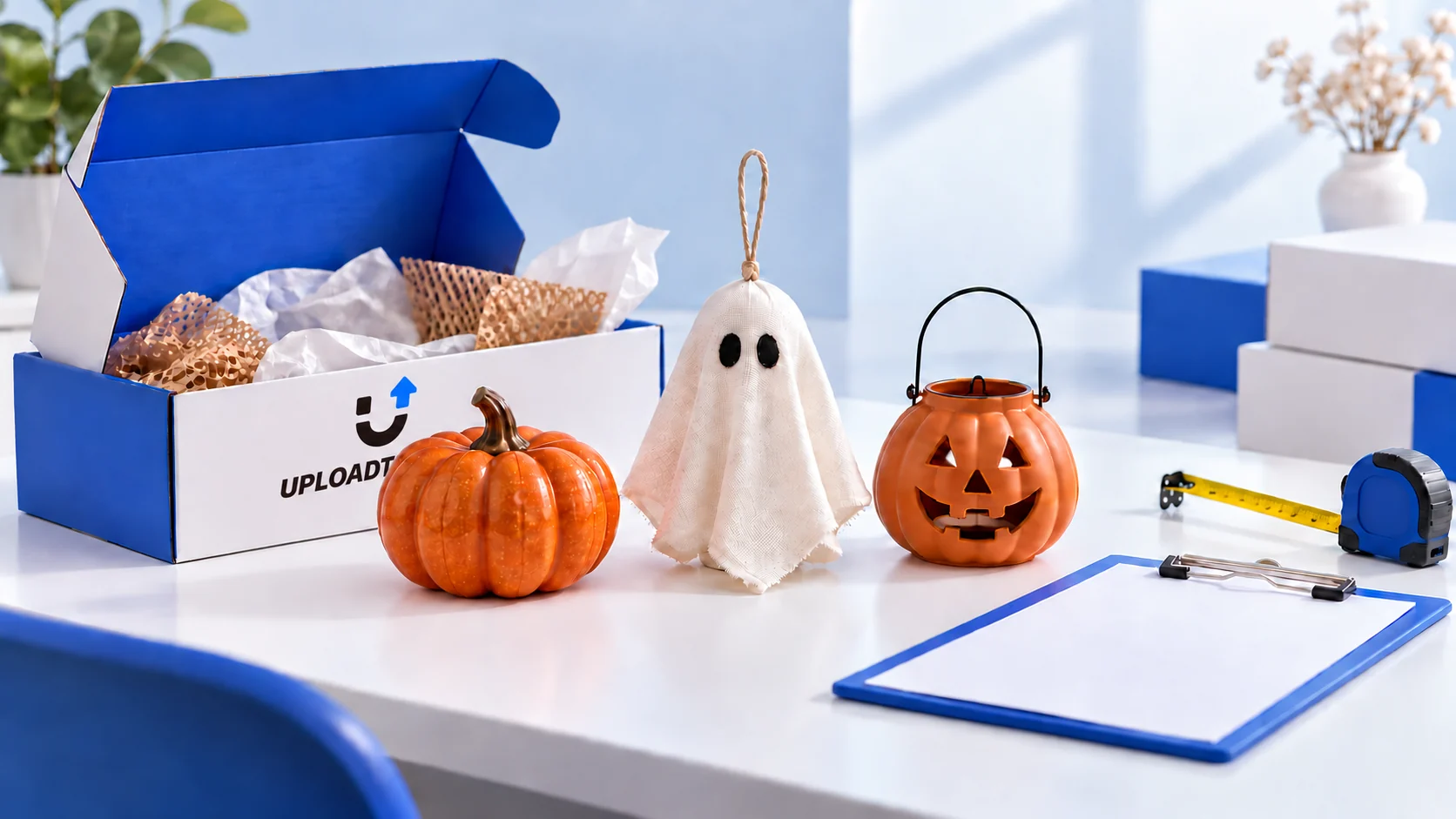
The images in this article are AI-generated illustrations. They do not represent verified product specifications, available stock or a tested packaging design.