Phone:
+85254973791
Email:
support@just-wonders.com

Phone:
+85254973791
Email:
support@just-wonders.com
An inbound quality inspection describes the agreed check after warehouse arrival. See how it differs from pre-shipment inspection and what each record can establish.
An inbound quality inspection tells you what the product looked like when it reached the warehouse and what the agreed arrival check observed. It does not, by itself, tell you what happened at the factory before dispatch. That difference matters when a supplier says QC is included: a product checked after arrival has passed a later checkpoint, but that is not the same evidence as a review while the finished lot is still at the factory.
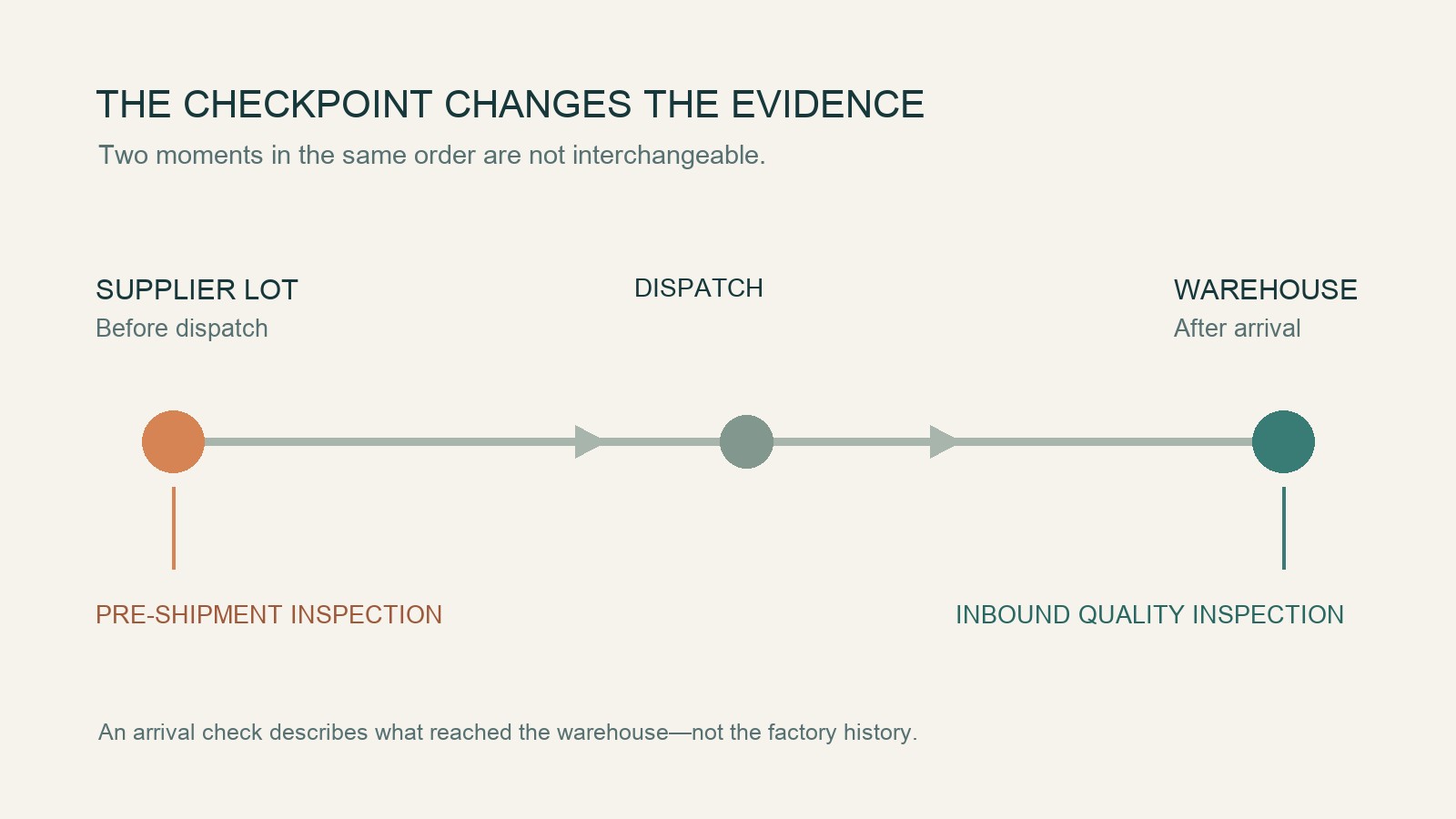
A pre-shipment inspection and an inbound quality inspection answer questions at different points in the order. One concerns a production lot before it leaves the supplier; the other concerns the goods when they reach the warehouse. If the stage is not named, “QC included” is too vague to tell you what the check can confirm.
A pre-shipment inspection takes place before dispatch from the supplier. It can compare a defined production lot with the agreed product reference while there may still be an opportunity to address a finding before goods move onward. It cannot establish what condition the goods will be in after transport, or whether cartons, quantities or products will change later.
An inbound quality inspection happens after the goods arrive at the warehouse. It can provide evidence about the condition observed at that point, within the checks agreed for the order. It cannot reconstruct the factory process or prove that a problem was absent before dispatch. Nor does it tell you what may happen after storage, picking, packing or shipping.
The distinction is useful even when the same product reference is used at both stages. The question is not simply whether someone “checked quality.” It is which handoff the check was meant to cover and what record exists from that point.
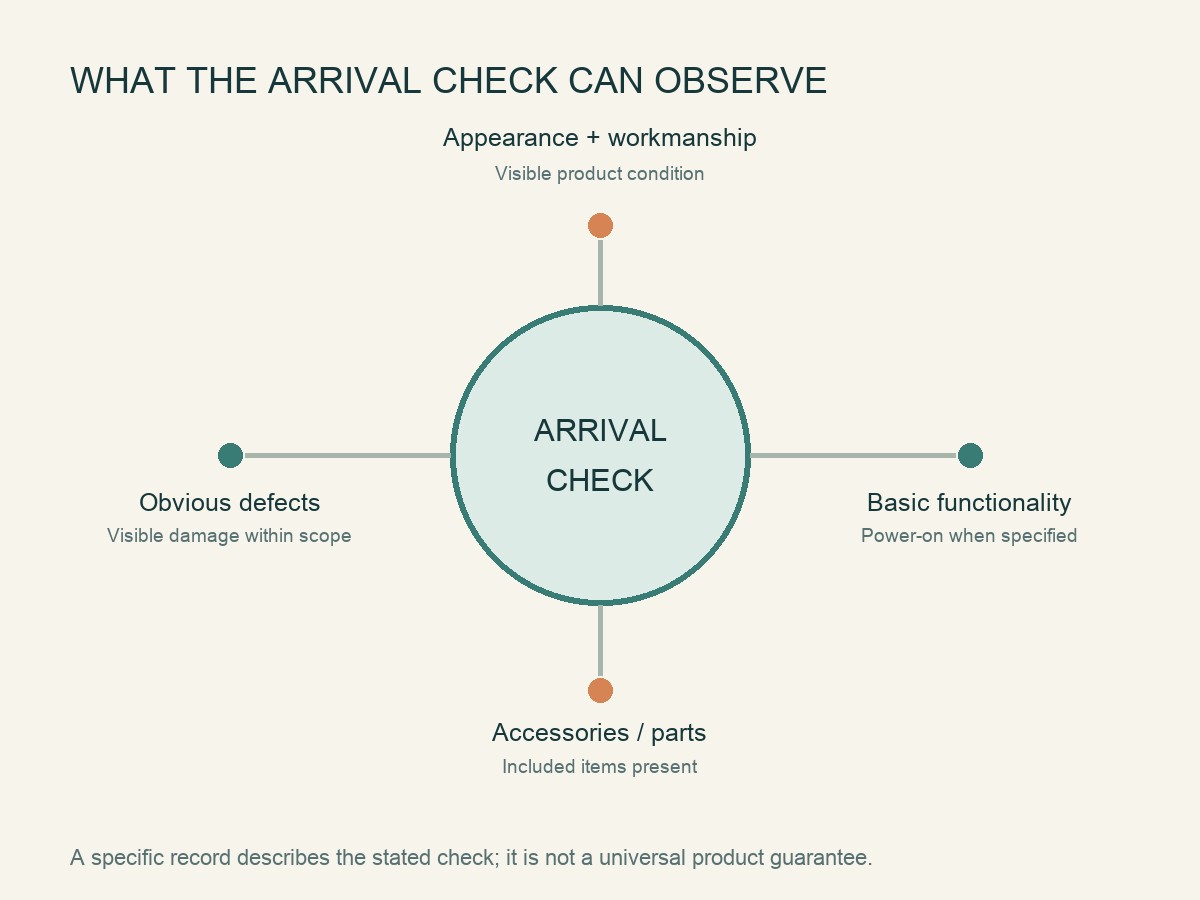
The published UTS pricing page describes an inbound Standard Quality Inspection as a visual check of product appearance, workmanship and basic functionality when goods arrive at the warehouse. It lists accessories and parts, plus obvious defects or damage, as areas covered. The same page describes an Electronic Product Inspection as a basic appearance and power-on check before storage. These descriptions help make the stage concrete: the check concerns goods at arrival and the stated scope, not every possible product risk. An inbound quality inspection is therefore useful when the unanswered question begins at warehouse arrival.
For example, an inbound quality inspection may record visible damage or whether the expected accessories arrived, if those points are in the agreed scope. A basic power-on check can show that a device turned on during that check; it is not a durability test, a laboratory result or proof of regulatory compliance. The evidence should be described at the same level as the actual check.
An inbound quality inspection is also a snapshot. A finding can relate to the condition observed when the goods arrived, while the cause may need further review. A check cannot alone show whether a variation began during production, handling before arrival or another stage. This is why the scope and point in the order matter more than the broad label “QC.”
A pre-shipment inspection concerns the goods before they leave the supplier. Depending on the agreed scope, it can help answer a different question: whether the finished lot appears to match the agreed reference before dispatch. It does not replace an arrival check, because the order still has to travel and be received. The two checkpoints create different records at different handoffs.
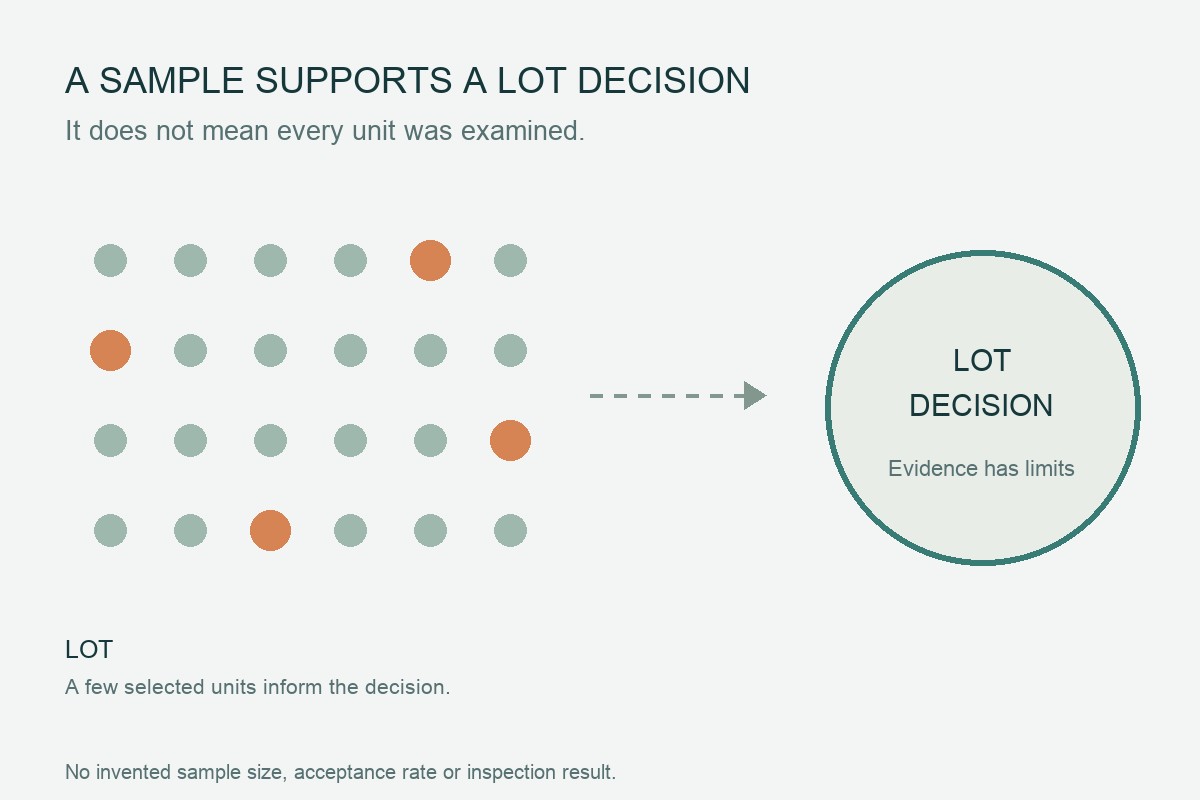
Even a sample-based pre-shipment inspection is not proof that every unit was examined. The NIST/SEMATECH e-Handbook explanation of acceptance sampling describes using sample information to make a decision about a lot; that is not the same as checking every item. A report should therefore be read for its stated lot and sample scope, not as a universal guarantee. A separate UTS article on what a product quote includes explains why goods, preparation and separately requested services need clear scope. That same distinction helps you ask whether the earlier inspection point is part of your order.
A pre-shipment inspection is not automatically part of every sourcing or fulfillment arrangement. If that earlier stage matters for your order, ask UTS to confirm whether it can be included in the specific plan before you approve the work. UTS handles supplier coordination and quality/QC under the agreed scope; you do not need to find or manage an inspector yourself.
Before relying on a quality-control promise, have the service provider state the checkpoint, the products or variants covered, the kind of observations included and what record you will receive. Also clarify whether a separate stage is included or optional. An inbound quality inspection request needs a named arrival-stage outcome. Those are scope questions for UTS to answer on the order, not inspection work you need to perform.
UTS’s public pricing page lists inbound Standard Quality Inspection and Electronic Product Inspection as optional services. Confirm which service and checks apply to your own arrangement. Do not assume that a general QC label means a factory visit, a laboratory test, every possible defect check or an automatic add-on to another service.
To ask about an inbound quality inspection, share the product link or specification, the version or variants involved, and whether you are asking about warehouse arrival or a pre-dispatch checkpoint. Tell UTS which service you want: inspection can be discussed on its own, without requiring you to buy a bundle. UTS can confirm the applicable scope and the information available for that request.
If you need that clarification, use the normal inquiry flow or contact UTS on WhatsApp at 85254973791. The service selections remain optional. A focused request makes it easier to distinguish an arrival check from a pre-shipment inspection before you choose the service arrangement.
For a single order, an inbound quality inspection answers what was observed after arrival; a pre-shipment inspection answers an earlier question before dispatch. The useful result is a clearly named checkpoint and a description that stays within the evidence it produced.