Phone:
+85295718875
Email:
support@just-wonders.com

Phone:
+85295718875
Email:
support@just-wonders.com
Resolve dropshipping duplicate orders by checking purchase intent, accepted instructions and physical quantities before retrying or canceling fulfillment.
Your order transfer stops responding. A colleague exports the same purchases into a spreadsheet and sends it to the supplier, just in case. By the next shift, two picking tasks exist for one customer purchase. Dropshipping duplicate orders become expensive when uncertainty about a message turns into authorization to ship the same goods twice.
Before resending or canceling anything, establish what each record represents. Compare the original purchase, the supplier’s accepted instruction and any physical fulfillment already underway. Two similar records can mean a repeated import, a genuine second purchase, or an approved replacement. Those situations require different actions, even when the customer’s name and product are identical.
Start with the store or sales channel and its original order reference. A displayed number alone may not be unique across two stores. Keep the store identity with it, and preserve the original reference when the supplier assigns its own task number. Your aim is to connect records, not force every system to use one numbering format.
Compare items, variants, quantities, payment records and creation times within the access your role permits. Matching details are a reason to investigate, not automatic proof of a duplicate. A customer can deliberately buy two identical items in separate transactions. Conversely, a copied fulfillment instruction can have a new task number without representing another purchase.
Check support history for a replacement order. It should identify the original purchase, the authorized replacement quantity and why it was approved. Do not delete that record merely because its product and address match an earlier shipment. The question is whether the additional shipment has a valid purpose, not whether two rows look alike.
If purchase intent remains unclear, ask the responsible support person to confirm it with the customer as appropriate. Hold only the affected fulfillment scope through your agreed process while investigating. Avoid suppressing every order for the same email address, or canceling a valid purchase because a similarity rule flagged it.
Separate order records, picking tasks, labels and physical parcels. One parcel may have a replacement label after a correction. Two printed labels may belong to one parcel, while two genuine parcels may cover different items from one order. Counting tracking references alone cannot tell you how many units were actually dispatched.
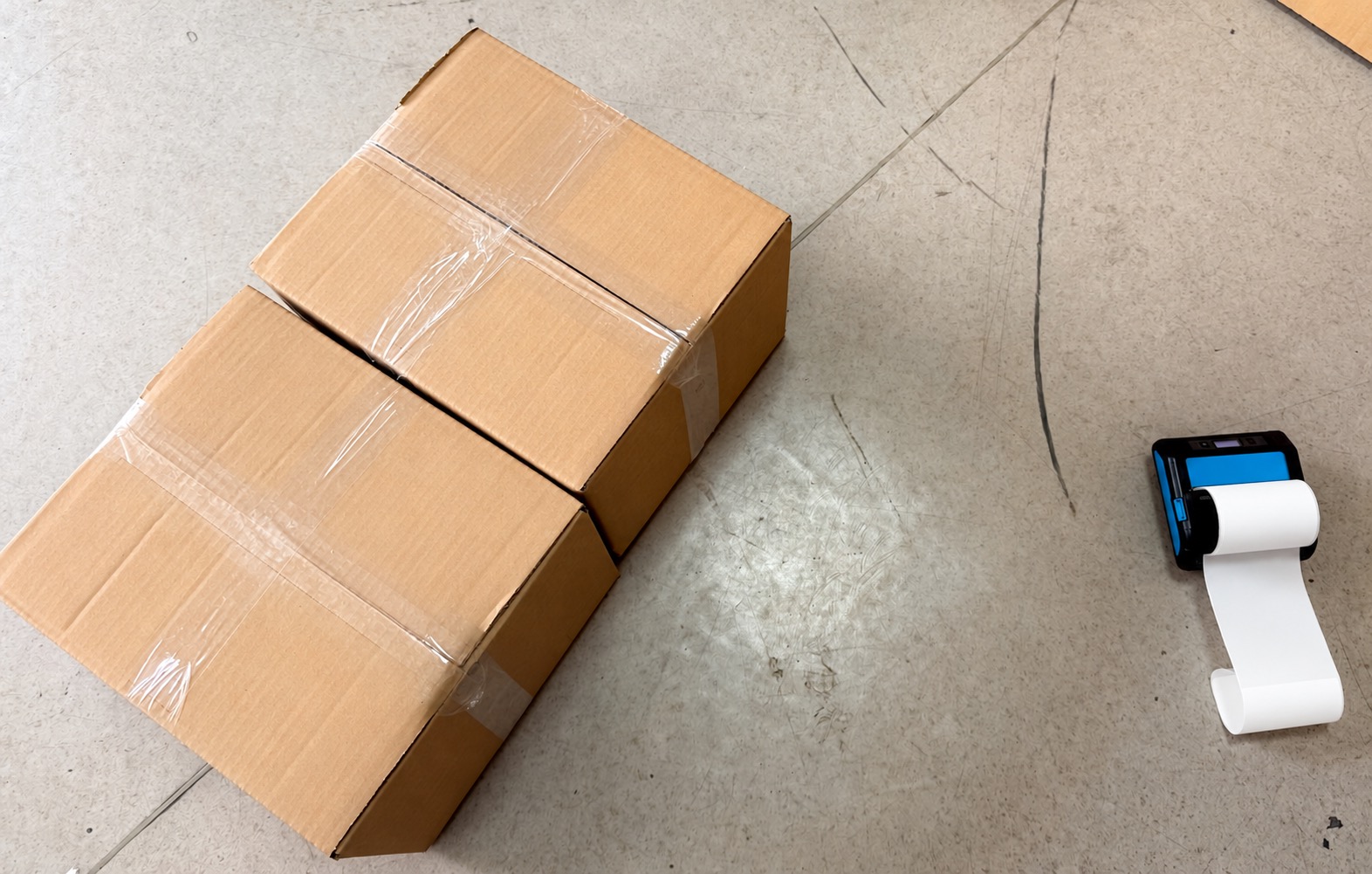
For suspected dropshipping duplicate orders, ask the fulfillment partner which task produced which parcel and what quantities it contains. Identify the active label and any invalidated reference without erasing the history. A photo of a printer or a stack of boxes cannot establish that relationship; it needs an order-linked record from the responsible operation.
Shopify’s order fulfillment guide distinguishes receiving an order, preparing it and handing the parcel to a carrier. It also recommends checking packed products against the customer’s order. Apply that distinction here: a correct product in each of two boxes is still an error if only one box’s quantity was authorized.
A timeout tells you that the sending side did not receive a usable answer. It does not, by itself, establish that the receiving side did nothing. The supplier may already have the order while the confirmation is missing. Treat an uncertain result as a question to resolve, not an instruction to create a new purchase reference.
Search the receiving system or ask the agreed contact to check the original store-and-order reference. Include the time window and relevant item details, without forwarding unnecessary customer information. If the task exists, reconcile its current state with your store. If receipt cannot be established, keep the uncertainty visible while you obtain a reliable answer.
For dropshipping duplicate orders, a manual fallback can cause the same problem as an automatic retry. Before emailing a spreadsheet, confirm whether the normal connection can still deliver those orders later. A second route should not silently become a second source of dispatch instructions. Agree how the fallback is identified and how later arrivals will be reconciled.
When a retry is appropriate, follow the receiving system’s documented repeat-submission process. Ask whether the original reference is recognized as an existing instruction, rejected for review, or treated as a new task. Do not claim that your connection is safe simply because somebody calls it automated. Its behavior needs to be understood and tested.
If the partner confirms no order was accepted and a fresh submission is authorized, record that basis and the resulting task reference. If the original request later appears, the team needs enough history to recognize the relationship. Changing the order number to get around a warning can destroy exactly the connection that prevents duplicate fulfillment.
Consider a hypothetical purchase for two blue pouches. One accepted instruction already released one pouch in an approved partial shipment. A copied instruction then requests the original quantity of two. Releasing the copy in full would send three pouches against a purchase of two. The outstanding requirement is one, subject to the latest order changes.
For this example, compare the authorized quantity, confirmed dispatched quantity and quantity committed to active picking or packing. Check the actual definitions in the partner’s records so you do not count the same unit as both dispatched and still active. Canceled quantities and separately approved replacements must remain distinguishable.
This is why dropshipping duplicate orders need an item-level check. Closing one duplicate row does not prove that its picking task disappeared. Ask which physical work was stopped, which quantities remain authorized and whether already reserved units were released correctly. Inventory should reflect recovered goods and actual commitments, not a cosmetic status change.
Cartons without readable order identifiers cannot settle the count. Similar sizes and plain packaging say little about their contents or purchase references. Have the team controlling the goods connect each relevant parcel to its task before removing anything from an outgoing group. Do not guess which box is the unwanted one from a wide warehouse photograph.

If both parcels have already left, the prevention step has passed. Record the confirmed dispatches, communicate accurately with the buyer and agree an appropriate resolution under your policy and applicable obligations. Do not promise interception, automatically demand payment for extra goods, or issue another replacement merely to close the support ticket.
To prevent dropshipping duplicate orders before the next campaign, arrange a controlled test with the integration owner and fulfillment partner. Mark test records clearly and use the agreed non-dispatch environment or procedure. Never experiment by submitting real customer orders repeatedly and hoping someone notices before packing. A useful test has a known expected result and a way to inspect it.
Run the same order import twice with the same source identity and unchanged contents. Check the number of accepted tasks and authorized units, not only whether the store displays an error. Then test a legitimate second purchase with a different source order reference. A control that blocks both cases is preventing genuine sales as well as duplicates.
Include a changed quantity or address under the original reference. The receiving side should follow an agreed update or review path, not silently interpret the change as another complete purchase. Also test an approved replacement with its own purpose and connection to the original. These cases reveal whether the workflow distinguishes repetition from new intent.
Ask the technical owner how interrupted confirmations and delayed messages are handled. Your role as a dropshipping seller is to specify the business outcome: one authorized quantity for one purchase, with explicit additional quantities for valid exceptions. You do not need to invent software guarantees or edit an integration yourself to ask for evidence of that behavior.

A resolved case of dropshipping duplicate orders should explain which records were linked, what each represented, and what happened to the affected goods. Preserve the retained task, stopped task, parcel references and any financial adjustment. Separate a duplicate payment question from a duplicate dispatch question; correcting one does not automatically correct the other.
Give the next shift a specific remaining action when the outcome is not final. “Supplier checking whether the second task was picked; follow up at the agreed time” is more useful than “duplicate fixed.” Keep sensitive customer and payment information in the appropriate restricted record rather than copying complete exports into broad chat groups.
UTS explains that order transfer and shipment updates are agreed during onboarding. Use that discussion to establish source references, repeat submissions, manual fallbacks and exception contacts for your store. Confirm what the actual connection supports; the published workflow is not a promise of built-in duplicate detection or guaranteed parcel interception.
Review confirmed causes rather than counting every similarity alert as an error. Distinguish repeated imports, overlapping manual instructions, valid repeat purchases and replacement mistakes. Dropshipping duplicate orders are controlled when the same purchase stays recognizable across systems, uncertain transfers are checked before retrying, and the physical quantity matches the latest authorized customer outcome.