Phone:
+85295718875
Email:
support@just-wonders.com

Phone:
+85295718875
Email:
support@just-wonders.com
Evaluate a leakproof bottle claim through its exact body, cap, seal, permitted use and test evidence before approving a supplier or writing your product listing.
A leakproof bottle claim needs a defined set of conditions. A cap that feels tight and a bottle that stays dry while standing on a desk do not establish what happens when the same item lies in a bag, is reopened repeatedly, or is used with a different drink.
Before putting that promise on a product page, ask the supplier what assembly was evaluated, how it was closed, what liquid was used and which conditions the result covers. If those answers are missing, you have a description, not enough evidence to approve the claim.
This is especially relevant when sourcing reusable drinkware for customer orders shipped from China. You are generally shipping the empty product; the performance promise concerns how the buyer will use it later. Do not confuse an empty bottle surviving parcel delivery with a filled bottle resisting leakage in everyday use.
The body, cap, seal and any drinking mechanism work together. A useful specification identifies those parts, not just the bottle’s color and capacity. Two caps can look similar from above while using different threads, sealing surfaces or internal components. A replacement that screws on is not automatically an approved equivalent.
Start with the actual version you intend to sell as a leakproof bottle. Record the body and lid references, the relevant gasket or seal, and removable parts such as a straw or spout insert. Ask whether different capacities share the same closure or merely the same styling. If a supplier changes a component, find out whether the existing performance evidence still applies.
A bottle seal is not always a separate rubber ring that you can pull out. Some closures seal through their molded shape or another design. Request a diagram or clear photographs of the approved assembly instead of demanding a generic gasket. Do not remove bonded parts or dismantle a closure beyond the manufacturer’s instructions.
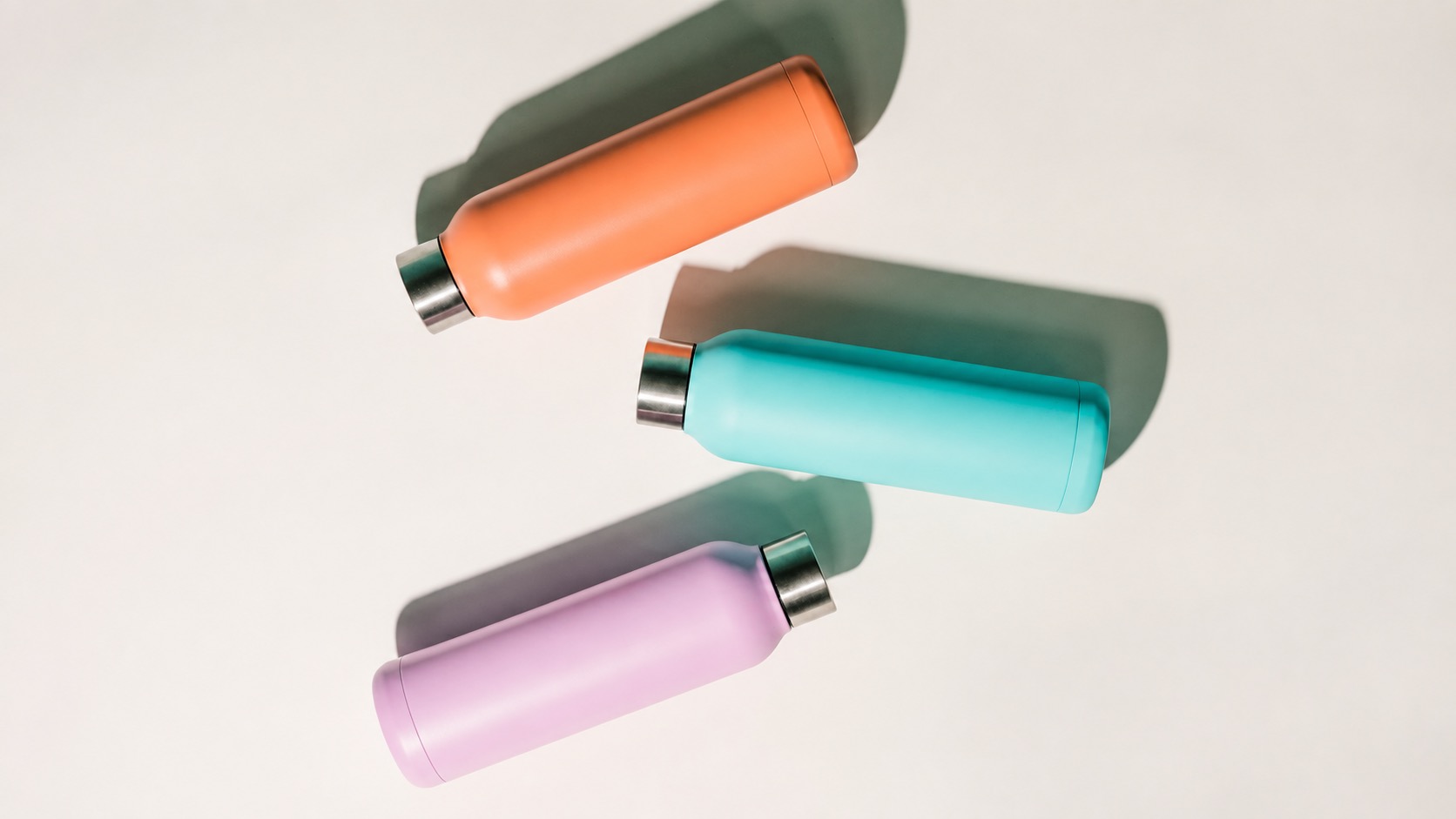
Color options need similar care. Three bottles in a coordinated range may use one verified assembly, or they may come from different production arrangements. Ask for the connection between the tested version and the quoted variants. The appearance of a matching assortment does not supply that connection.
Write down what a customer is reasonably being told the product can do. Is it intended for still, cold water? Can it be carried horizontally when fully closed? Does the drinking opening have to be locked? Those are different propositions from “spill resistant while held upright.” Use the product’s documented instructions to define the permitted use.
The distinctions are visible in real manufacturer guidance. Owala’s FAQ separates beverage allowances by product and says its listed FreeSip and Flip models are not for hot, carbonated or perishable liquids. It also warns that pressure can cause unexpected leaking or spraying. That guidance is specific to those products; it illustrates why you cannot assume that all drinkware has the same limits.
Do not test an unknown bottle by heating it, adding carbonated liquid or pressurizing it. If your proposed claim involves conditions outside the supplied instructions, get suitable technical evaluation before making it. A convenient demonstration should never become an improvised safety experiment.
For an agreed closure test, specify the permitted liquid and temperature, fill level, closure method, orientations, observation period and how leakage will be detected. Also identify whether the unit is new or has undergone an agreed sequence of opening, cleaning or use. The supplier or qualified test provider should help choose a method appropriate to the design and promise.
There is no universal duration or tightening force that this article can assign to every leakproof bottle. Copying an arbitrary number into a checklist makes the record look precise without explaining why it represents the intended use. Agree the method first, then interpret the result within that method.
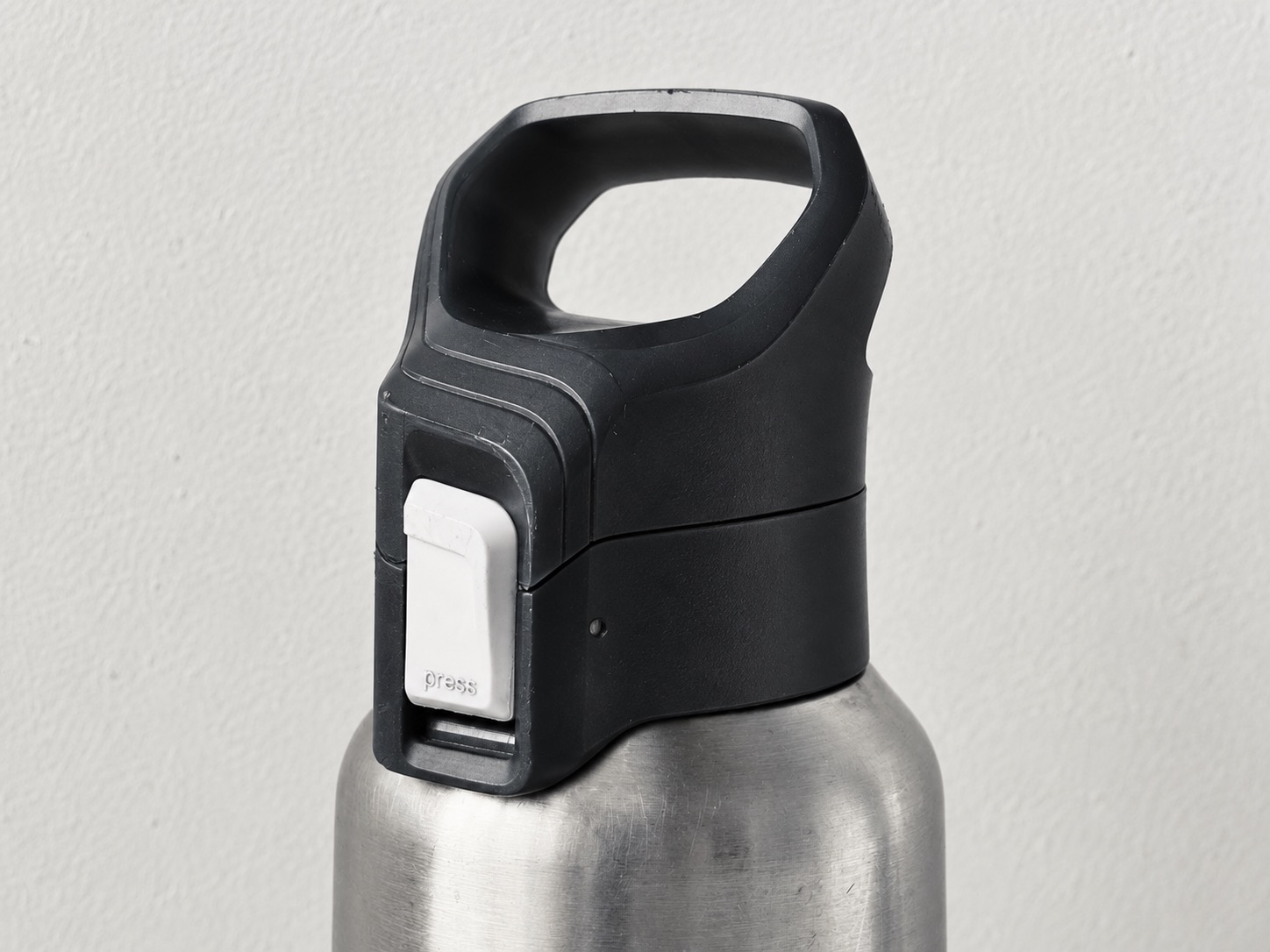
Liquid can escape through the cap-to-body joint or through a drinking opening. A push-button closure can also be opened accidentally even when its seal works correctly while shut. Treat those as different observations because they can require different changes to the product or instructions.
When inspecting a sample, check the specified closed state. Does the latch engage as intended? Is a protective loop or lock supposed to be positioned before carrying? Can the person using the product tell whether it is closed? Do not assume an audible click proves that every sealing surface has seated correctly.
Record where moisture first appears rather than only photographing the final puddle. A wet cap after filling can be residual water, while a recurring wet path from a joint may need investigation. Dry the outside as the agreed procedure requires, keep the observation surface suitable, and avoid changing several conditions at once when comparing samples.
A successful closure test for one state does not validate every other state. “No leakage observed with the lid locked under the stated method” is narrower than “never leaks.” The narrower sentence is often more useful internally because another person can see exactly what was checked.
If the bottle seal is removable for cleaning, examine how it should be reinstalled using the actual instructions. A twisted, missing or incorrectly seated part needs correction, but do not conclude that every failure is user error. Check whether the design and instructions make the correct assembly understandable and whether the supplied component matches the approved version.
A report supporting a leakproof bottle claim should identify the exact sample or lot, the method, the conditions and the result. Look for the model or component references that connect it to your order. A supplier’s video of an unidentified bottle is not equivalent to a traceable result for the product you are buying.
Ask how many units were assessed and how they were selected. Testing a development sample answers a different question from checking a production lot. Neither should be described as proof that every future unit will perform identically. Keep failed results and subsequent corrections together so a later pass does not hide what changed.
Also separate leakage from other claims. A leakproof bottle result does not establish food-contact compliance, chemical safety, temperature retention, dishwasher compatibility or drop resistance. Each of those has its own evidence requirements. A certificate mentioning a material is not automatically a performance report for the assembled closure.
For a practical comparison, consider two hypothetical supplier replies. One says “100% leakproof” and sends a short upright-bottle video. The other identifies the body and cap version, states the permitted use, describes its evaluation and provides a traceable result. The second reply is more assessable, but you still need to judge whether its method and coverage support your intended promise.
That is the purchasing decision: approve the defined claim, request better evidence, narrow the offer to supported uses, or choose a different product. Do not solve an evidence gap by adding more emphatic language to the listing. If bag-safe use is central to your offer and remains unverified, that gap matters to whether you should proceed.
Reusable products are opened, washed and assembled again. Your instructions should address that reality without borrowing care advice from a different bottle. Owala, for example, describes removing its spout gasket for separate cleaning. That does not mean the seal in another design should be removed in the same way.
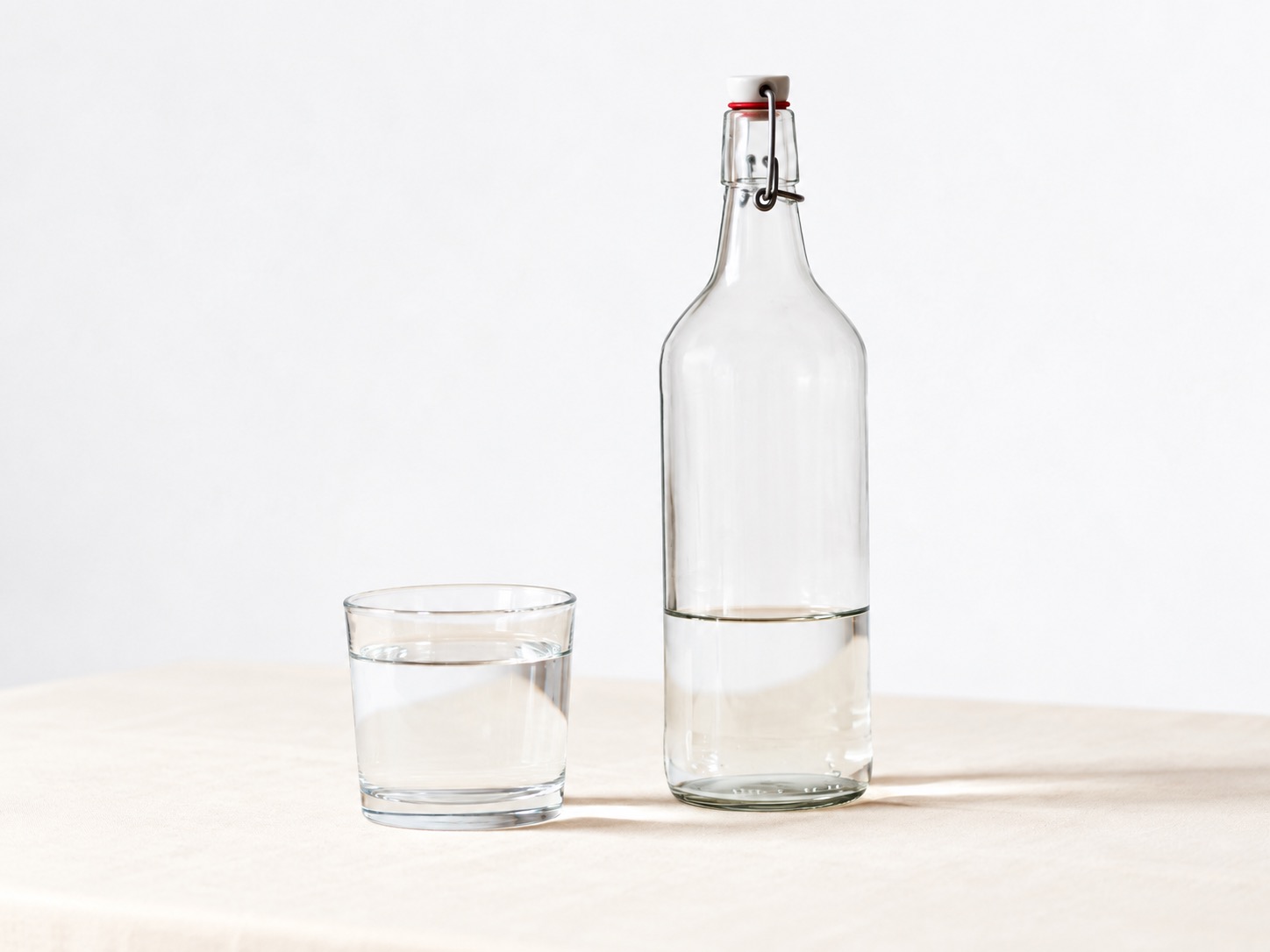
Check which parts the customer is expected to remove, how to clean them and how to recognize correct reassembly. A replacement seal should be the specified part, not merely something with a similar diameter. If the closure uses a different construction, such as a swing-top mechanism, evaluate that construction on its own terms.
Drying deserves its own instruction. Nalgene’s FAQ advises fully air-drying its cleaned bottles with the cap removed and storing them with the cap off. Follow the instructions applicable to the product you sell; do not interpret a leakproof bottle claim as advice to trap residual water inside a closed bottle during storage.
Keep the limit clear when explaining care. A customer needs usable directions, but cleaning instructions do not repair a mismatched cap or validate an unsupported performance promise. If the product requires an unusually delicate assembly to work, consider whether the design suits your intended customer rather than assuming a longer instruction sheet will solve everything.
Once you choose a product, connect the evidence to the purchase specification. Include the approved body and closure references, component substitutions that require approval, the relevant instructions and the checks agreed for receiving. That helps keep a later batch connected to the version you evaluated.
UploadToSell’s warehouse workflow includes every-item inspection after arrival, with product-specific requirements included in the approved checklist. Discuss the scope of drinkware inspection explicitly. A visible component and closure check is not automatically a laboratory evaluation, and “every item inspected” does not mean every possible performance test is included.
On the product page, state the leakproof bottle claim’s supported use conditions where shoppers can find them. Match images and instructions to the supplied cap. Do not display an open straw lid beside an unqualified bag-carry claim, or use the same copy across variants whose closures have different limits.
The useful outcome is not the strongest adjective. It is a leakproof bottle promise that matches the exact product, permitted use and evidence you have. When those agree, your supplier, receiving team and customer are working from the same expectation rather than three different interpretations of a tight cap.