Phone:
+85295718875
Email:
support@just-wonders.com

Phone:
+85295718875
Email:
support@just-wonders.com
Compare zipper types for bags by flexibility, weight, finish and slider design. Learn what coil, molded and metal construction can—and cannot—tell you.
When you compare zipper types for bags, start with the opening your customer will use, not a rule that metal means premium and plastic means cheap. Coil, molded-tooth and metal zippers can all belong in a well-made bag. The useful choice depends on how the opening bends, the weight you want, the visible finish and the way the slider works after sewing.
For a soft travel pouch, a flexible opening may matter more than shiny hardware. For a structured handbag, the exposed teeth may be part of the design. Neither choice tells you whether the lining catches or whether the finished bag closes comfortably when filled. Those questions need an assembled sample, not just a loose zipper or a supplier's photograph.
The teeth are the parts that engage along the opening. The slider joins or separates them; the pull tab is the part you hold. The fabric strips carrying the teeth are called tape. Once the two sides engage, they form a chain. Separating these terms helps you ask for a change to the right component instead of requesting a vaguely “better zipper.”
Coil zippers use a continuous spiral of plastic elements. Molded zippers use individually shaped plastic teeth. Metal zippers have metal elements attached along the tape. Within each family, size, finish, slider and installation can change the result. A family name is a starting description, not a complete specification or a durability rating.
The practical way to compare zipper types for bags is to hold the bag design steady while changing the closure. Otherwise, a roomier sample with a different lining can feel easier to close, and you may give the zipper credit for a change that came from the bag itself.
A coil zipper is worth considering when the opening follows a curve or the bag needs to fold. In its explanation of coil zipper construction, YKK describes spiral plastic elements made from materials such as polyester or nylon, with flexibility in a flat plane and around curves. That does not make every coil identical, but it explains why this construction is useful beyond clothing, including luggage.
"Nylon zipper" is often used as shorthand. Do not treat the phrase as proof of the actual element material. Ask which material and product specification the supplier proposes, especially if your product description will name the material or make a performance claim. Tape material is another question; it is not automatically the same as the element material.
Among zipper types for bags, coil also makes sense when reducing hardware weight or matching the lining is a priority. YKK's handbag zipper selection guide specifically discusses those uses and warns against assuming that a bag with a plastic or coil zipper is necessarily cheaper. A discreet closure can be a deliberate design choice.
Imagine a lightweight organizer with a rounded opening. You want to reach the corners without fighting a rigid edge, and you want the pouch to pack flat when empty. A coil sample is a sensible starting point. Check it in the intended fabric and lining, though: a flexible chain cannot compensate for a seam that feeds loose fabric into the slider.
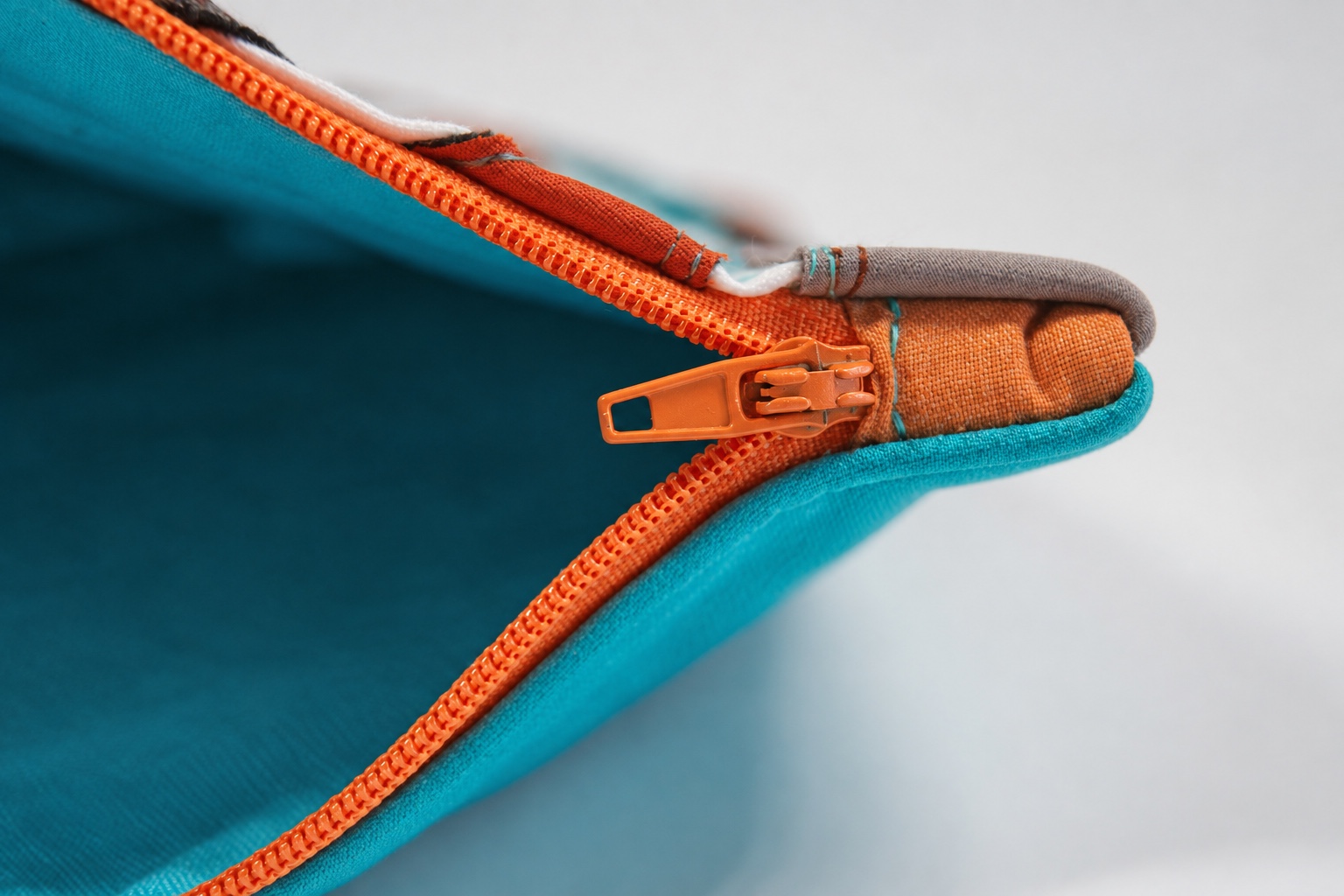
Molded-tooth zippers give you separate, clearly defined plastic elements. The shape and spacing are easy to see in an exposed closure, so they can become a strong visual feature. A bright zipper against neutral fabric may be intentional; large, contrasting teeth on a small, understated pouch may not be.
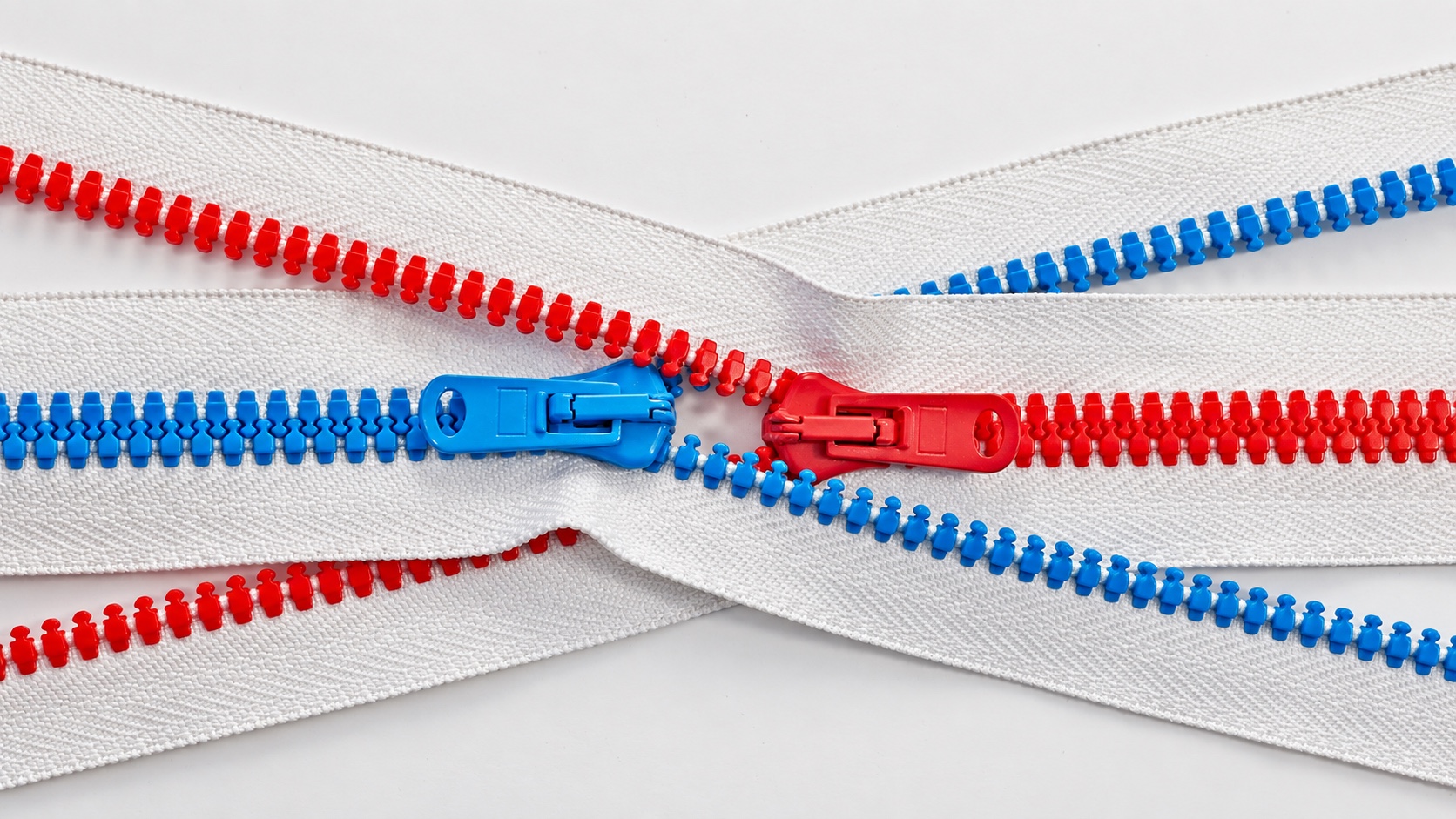
YKK's molded-tooth product explanation describes its VISLON line as injected plastic elements, such as polyacetal resin, and says those products are lighter than metal zippers of the same size. It also explains that the pigment is introduced during injection. VISLON is YKK's brand name, not a generic name to apply to any supplier's molded zipper.
When evaluating zipper types for bags, use that construction information to frame a sample request, not to invent a universal strength ranking. A larger molded tooth is not automatically stronger than every smaller metal or coil option. Compare the supplier's specified products for your application, including the actual slider, tape and attachment to the bag.
Color is worth checking on the assembled sample in ordinary light. Teeth, slider, pull and fabric tape may not look identical even when someone calls the whole closure “orange.” Decide whether a coordinated contrast is acceptable or whether you need a closer match. A product photo alone can hide differences in gloss and texture.
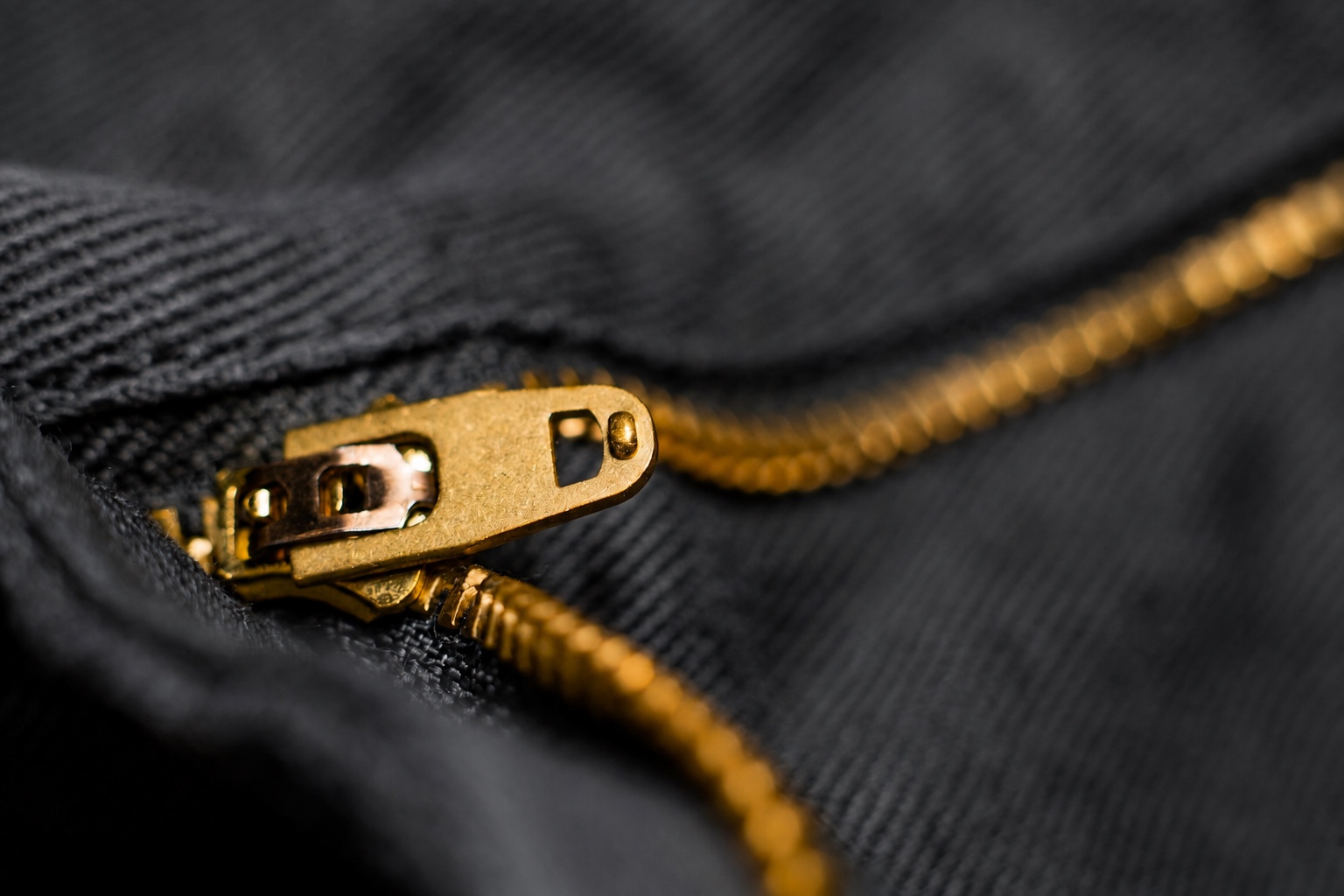
Choose metal because its appearance and feel support the product, not because the word ends the quality discussion. YKK lists several metals used for handbag zipper elements and notes that brass can oxidize and change color over time. Specific treated product lines may behave differently. A claim about one finish should not be transferred to every metal zipper in a supplier's catalog.
Ask what the element material is and what surface finish is being supplied. A gold-colored photograph is not a material specification. The same caution applies to silver-colored teeth: you can see the shape, spacing and surface appearance, but you cannot establish the alloy, coating durability or corrosion resistance by looking at the image.
Metal can be a good candidate for a structured bag where exposed hardware is part of the design. In a very light pouch, weigh the finished sample and decide whether that hardware still suits the product. Do not estimate parcel savings from the zipper alone; the packed item, packaging and applicable shipping service determine the shipment you actually buy.
Comparing zipper types for bags also means considering what touches the closure. Take the intended contents in and out through the actual opening without forcing them. Look at whether the design keeps delicate linings and easily marked items away from exposed elements. This is a practical sample observation, not a substitute for a specified abrasion or durability test.
Choosing among zipper types for bags still leaves a separate slider decision. YKK's handbag guide describes different slider and pull arrangements, including non-locking designs. Do not confuse a slider's locking mechanism with a padlock or a promise that a bag is theft-proof. If a supplier proposes a locking feature, ask what moves, what locks and how the customer releases it.
Try the pull with the grip your customer is likely to use. A decorative tab can look attractive in a close-up yet be awkward to grasp on a small pocket. Two sliders may be useful when the opening should be accessible from either side, but they also change the hardware and closure layout. Request the intended arrangement on the sample rather than treating it as a cosmetic detail to add later.
The installed opening is where zipper types for bags become a product decision. Check the usable access, not only the quoted zipper length. Fabric at the ends, seam placement and the shape of the bag can limit how wide the mouth opens. Put the intended items inside and check whether the edges come together naturally; needing to drag the fabric into position suggests a design problem worth investigating.
Keep water claims separate from these construction choices. YKK distinguishes water-resistant and waterproof zipper products; the ordinary labels coil, molded or metal do not establish either claim. A coated-looking closure is not enough to advertise a waterproof bag. The finished product and the exact claim need appropriate supporting evidence, including more than the closure alone.
Suppose you are sourcing a compact travel pouch and the first sample feels stiff around the corners. Ask for a second version that changes the proposed zipper while keeping the bag dimensions, fabric, lining and opening layout the same. If the supplier must also change the seam or tape width, have that difference explained. You want to understand the improvement, not merely select the smoother of two unrelated samples.
Use the same intended contents in both. Open them empty, fill them to the intended use level and open them again. Notice where resistance occurs, whether lining approaches the slider and whether the mouth gives useful access. Repeat ordinary handling enough to identify inconsistent behavior, but do not call a few hand pulls a lifetime test. Agree on any formal test requirements separately.
Then compare the complete proposal. A closure change can affect the component price, sewing work, available colors or sample lead time. None of those effects has one universal direction. Ask the supplier to identify the exact chain, slider, pull, finish and installed length included in each version so the quote remains comparable.
If you need help turning a bag idea into a sourcing request, UTS's purchasing service is a relevant place to discuss the proposed product and supplier options. Send the bag use, dimensions, reference photos, quantity and the specific closure tradeoff you want priced. Confirm the scope of sampling and any inspection with the team; a sourcing conversation is not evidence that a particular zipper has already been tested.
The best choice among zipper types for bags is the one that supports the finished bag's job. Narrow the construction by flexibility, weight and appearance, then make the decision with the actual opening, slider and contents in front of you. That gives you a reason to keep or change the closure that is stronger than “metal looks premium” or “plastic costs less.”