Phone:
+85295718875
Email:
support@just-wonders.com
Phone:
+85295718875
Email:
support@just-wonders.com
Review a custom packaging proof without mistaking a layout for a finished package. Check folded placement, sample scope and fit before approving production.
Your packaging supplier sends a neat image of your logo on a box and asks for approval. The spelling is right, the colors look familiar, and you want to move ahead. Before replying, establish what this custom packaging proof actually represents: a proposed layout, a printed sample, or the complete package with your product inside.
Those are different approvals. You can confirm wording and logo choice without accepting an unseen material or an untried fit. For a dropshipping store whose packaging goes straight to a fulfillment partner, make the missing checks part of the commissioned work. You do not need to become the printer or pack every order yourself.
A digital proof is a file showing the proposed design. In the context of a custom packaging proof, it can help you review the logo version, text, relative placement and which surfaces receive printing. A custom packaging proof cannot let you feel the board, open the closure or judge the package with the real contents inside. Ask the provider what the file is intended to confirm before treating it as approval for production.
Read the actual words, not just the overall appearance. Check the store name, website, instructions and any product-specific text. If a printed code or link is included, check its destination as well as its appearance. A seasonal message or a product name also limits where the packaging can be reused; decide whether that restriction is intentional. Each of these details should be confirmed in the custom packaging proof.
Ask for a view of every printed surface. A front-facing mockup may conceal the underside, inside lid or side panel. If the provider uses a flat cutting-and-folding layout, have them identify the front, back and opening direction. You can approve the intended result without editing the technical file yourself. A complete custom packaging proof should show every surface that will actually be printed.
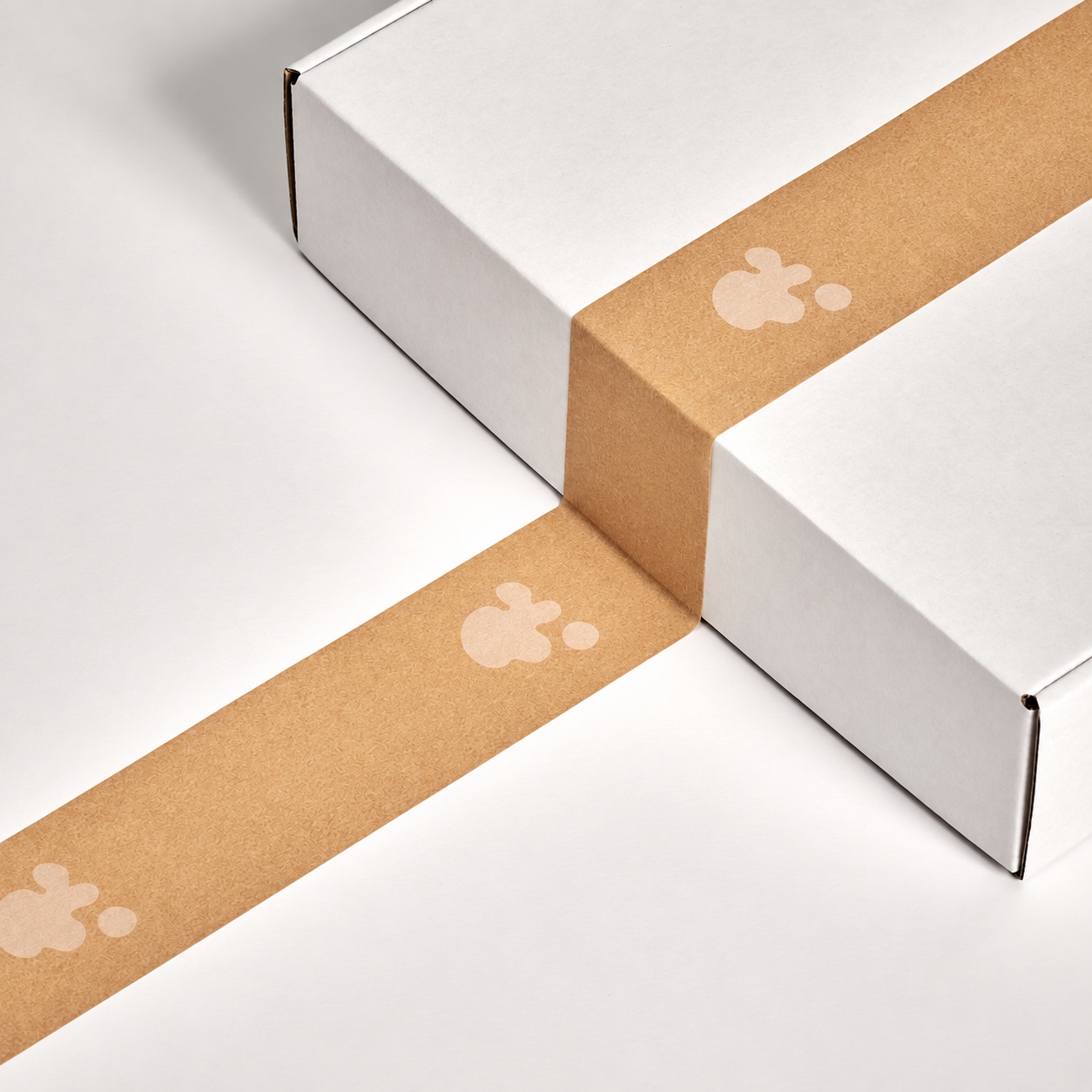
The paper band crossing this box edge shows why placement needs more than a flat image. Part of the design sits on top, part turns down the side, and part continues beyond the box. On your own packaging, a word or small symbol placed across that turn could become difficult to read. Specify where important content should remain visible.
Print placement depends on how the package is assembled and opened. A logo centered in the flat file may be on the wrong face once a flap folds over. An inside-lid message can face away from the customer if the intended opening direction was misunderstood. Ask for the closed and open views that resolve those questions.
For example, a seller might want a short message to face the customer when the lid opens, with the store logo still visible on the closed parcel. That request describes two views, not one. The provider can show how the artwork appears in each position before the seller approves it.
Leave the production clearances to the packaging provider. Ask them to confirm that important text stays away from the relevant cuts, folds and closure areas for the chosen design. Do not copy a margin from a different box template or assume that enlarging your existing artwork will suit another size.
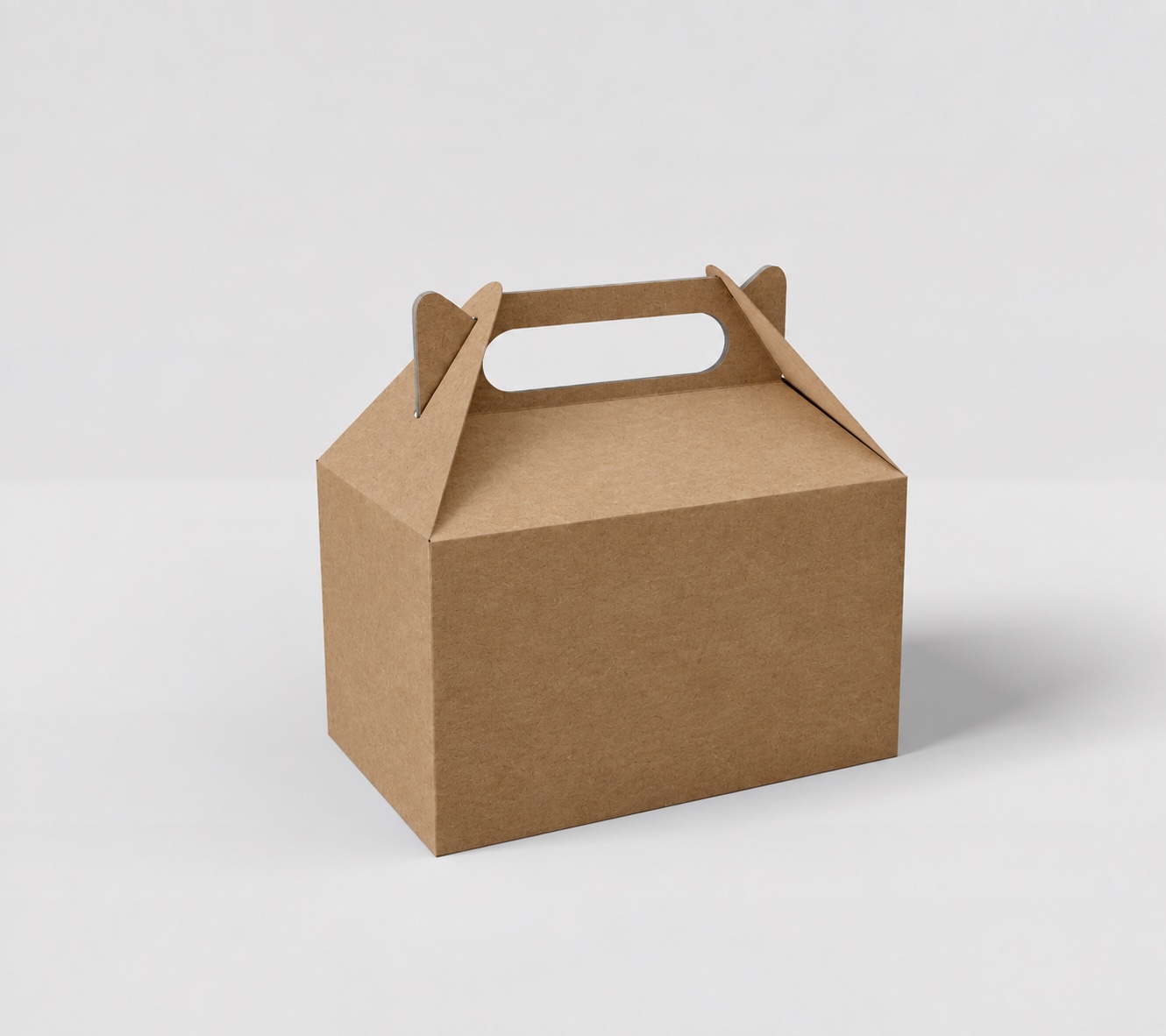
This folded carry carton has a front panel, sloping upper panels and a handle opening. Each offers a different usable area; a single rectangular logo preview would not explain them all. The structure is an illustration of panel visibility, not a recommendation to send customer orders in an unprotected retail carton.
Also consider what will cover the design later. If this is the outer shipping package, ask where the carrier label and closure will go. If it is an inner product box, ask how it will sit inside the shipping packaging. That avoids paying for a prominent message that disappears beneath a label or is hidden on the bottom.
A packaging sample is useful only when you know which questions it can answer. An unprinted structural sample may help confirm dimensions and opening, while a printed sample may show the artwork on a material. Ask whether the proposed sample uses the intended board, finish and production method, and identify anything that will differ in the final order.
If a particular color or surface finish matters to your brand, agree the physical reference and how it will be reviewed. A screen image alone is not a physical color reference. Photos or video can show layout and obvious issues, but they do not replace handling the sample when stiffness, texture or opening feel is the unresolved question.
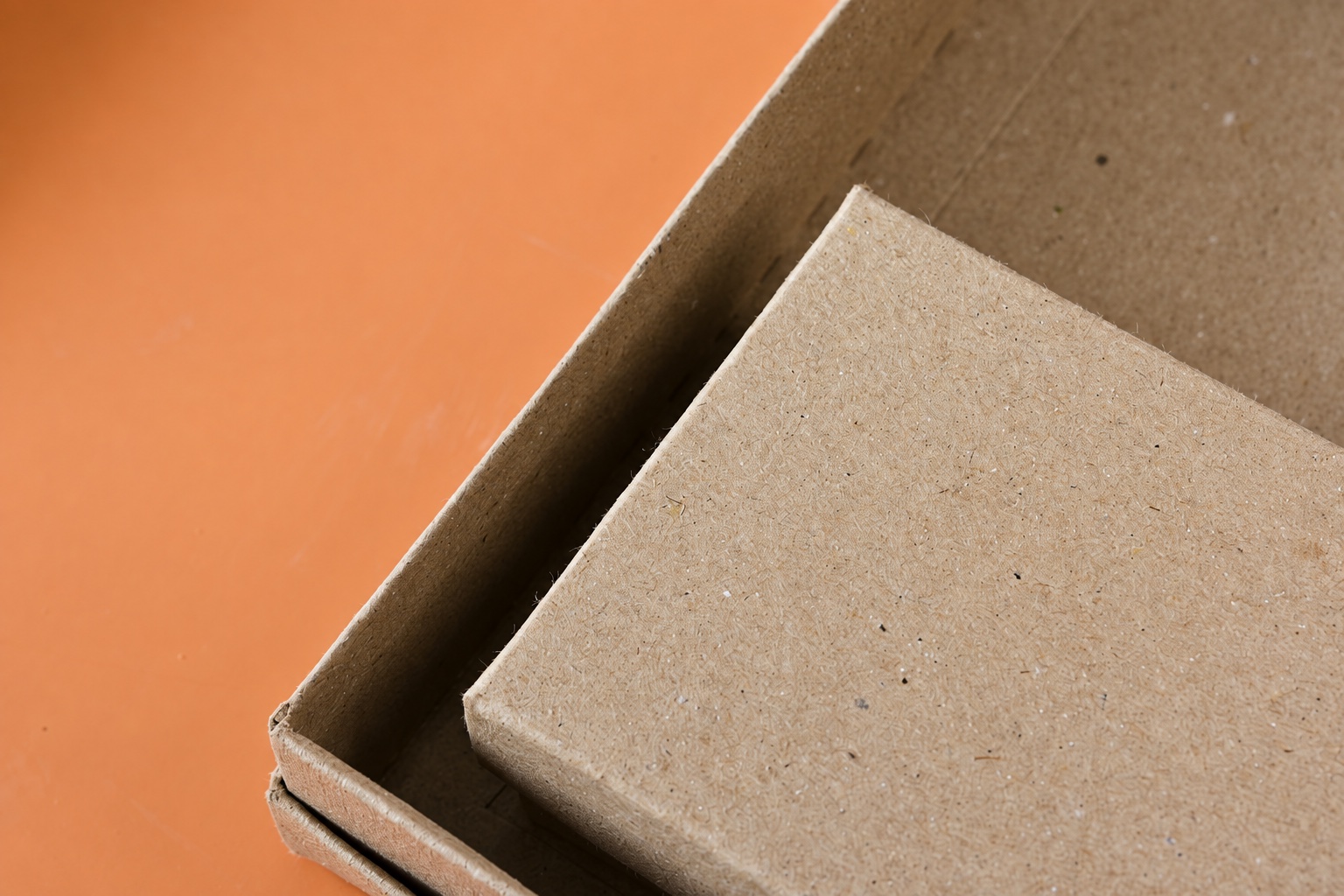
The visible board edges and clearance in this close-up are physical details that a flat artwork file does not describe. Yet an empty box still cannot establish whether your product will fit with its accessories and protection. Ask the provider to show the complete proposed contents in the package, not only the package by itself.
DSers’ ecommerce packaging guide emphasizes matching packaging to the product’s characteristics. Apply that principle to the version you actually sell: its dimensions, fragile parts, accessories and agreed protective materials. A sample prepared around a smaller variant is not enough to approve the larger one.
The packed sample should close normally without forcing the lid or omitting needed protection. If a new printed or coated surface changes the closure, ask for a suitable check with the actual materials. Our guide to packing tape lifting at carton edges explains why a successful bond on plain board does not automatically establish the same result on another surface. A neat sample on a desk is still not proof of transport performance.
Make your reply match the evidence. If only the wording and layout are settled, say so and identify the remaining material or fit question. When you are ready to authorize production, refer to the agreed artwork version, package size, material, finish and applicable product. Avoid leaving several files named “final” in the same conversation with no indication of which one was accepted.
You can keep the project small. A sticker, card or printed band may meet your current need without replacing the entire box. The useful choice is the one that suits your product and intended presentation, not the largest collection of branded components.
UploadToSell’s branding and packaging service can help prepare or adjust artwork and coordinate samples and production for the agreed project. Packaging can be commissioned on its own; purchasing and fulfillment are not compulsory additions. Send your product link or dimensions, existing packaging, logo file and the aspect you want to change. The team can then discuss suitable options, what needs confirmation and a project-specific quote.