Phone:
+85295718875
Email:
support@just-wonders.com

Phone:
+85295718875
Email:
support@just-wonders.com
Find why packing tape lifts at carton edges. Separate surface, contact and material problems, then compare a specific fix before changing your packing method.
A strip lifting at the corner of a freshly closed carton is a reason to pause, not automatically a reason to buy stronger tape. Packing tape needs a suitable surface, the right application conditions, and consistent contact. A dusty panel, a flexing flap, or an unsuitable product can produce a similar-looking failure. Adding another strip may hide the first problem without correcting it.
For an ecommerce seller, the useful question is what to change before more customer parcels leave the packing area. Start with the failed seal and compare it with a controlled sample. Separate a bonding problem from a torn tape backing or damaged carton. Those observations lead to different fixes, and none can be diagnosed reliably from a cropped photograph alone.
This guide concerns ordinary pressure-sensitive tape used for carton sealing, applied by hand or a suitable dispenser. Water-activated paper tape requires its own equipment and application instructions. Do not transfer the advice between the two systems without checking the manufacturer.

Look at where the separation begins. Is only the short end lifting from the side panel? Is the whole strip loose? Has the tape split while the adhesive remains attached? Or has the outer paper layer of the carton torn away with it? Describe what you see before assigning a cause.
Poor tape adhesion means the bond is not adequate for the intended package, but that description does not identify why. An intact strip lifting cleanly suggests investigating contact, surface condition, and compatibility. A broken backing calls for a different review of the material and loads. Torn carton fibers show that the paper surface is involved; they do not prove the complete parcel is ready for transport.
Short end lifting: compare application contact at the edge and side panel. This observation does not prove that a different adhesive alone will solve the problem.
Whole strip releasing: compare a clean, dry matched carton under the specified conditions. One failure does not establish that every roll in the batch is defective.
Backing splitting: investigate tape grade, carton movement, and handling conditions. Extra layers are not a demonstrated redesign merely because they cover the split.
Paper separating: assess the carton surface and structural condition. Paper tearing with the adhesive does not establish that the package passes a shipping test.
If the issue was discovered after delivery, preserve the original evidence and keep the customer response separate from the packaging investigation. The shipping damage evidence guide explains that handoff. Do not recreate a failure and present the new photograph as the original condition.
Try the same packing tape on a representative clean, dry carton of the same specification. Check the actual sealing area, including the side panels where the ends finish. Dust, oil, moisture, loose fibers, old adhesive, and surface coatings are possible variables to investigate, not interchangeable explanations.
The Shurtape AP 301 product guidance specifies clean, dry surfaces free of grease, oil, or other contaminants. It also tells users to determine suitability for their particular purpose and application method. That is a useful principle for a trial, not a recommendation that this particular product suits every parcel or carton.
Do not soak cardboard to clean it or introduce a solvent simply because it removes a mark. Either can change the packaging or create another handling concern. Use sound, appropriately stored packaging for the comparison and ask the material supplier how its surface should be prepared. A wet, crushed, or delaminating carton may need replacement rather than another sealing attempt.
Printed or coated cartons deserve their own trial. A result on plain kraft board does not establish the same bond on a glossy panel. Similarly, a specification change by the carton supplier can matter even when the size and printed artwork remain the same. Keep the carton version identifiable while you investigate.

With pressure-sensitive packing tape, laying the strip over a seam is not the same as making consistent contact. Inspect how the tape meets the top panel, turns over the edge, and reaches the side. Follow the dispenser and tape instructions for application rather than pulling harder or pressing with an improvised sharp tool.
Watch the carton as the seal is applied. If the top sinks or the flaps move apart, the surface under the tape is changing. Shurtape's discussion of underfilled cartons explains how flexing under application pressure can create uneven contact and lifted edges in automated case sealing. Its equipment recommendations are specific to that setting; the contact problem is still a useful question to investigate in your own packing method.
Compare the package size and internal support with the actual product. Do not fill every empty space indiscriminately or force a bulging carton shut. The goal is suitable protection and a stable closure, not maximum material consumption. If the proposed carton cannot close normally around the approved contents and cushioning, reconsider the packaging combination.
For a hand dispenser, inspect the tape path, cutting edge, and application parts according to its manual. A snagged strip or inconsistent application deserves attention before buying a different roll. Keep fingers clear of exposed teeth. Machine adjustments and maintenance should be handled by trained personnel using the equipment's safety procedures, never by reaching into moving parts to improve a seal.
A service temperature describes conditions after application; an application temperature concerns making the bond. Do not treat them as the same limit. The AP 301 specification lists these ranges separately, illustrating why a product advertised for demanding transport conditions still needs its own application requirements checked.
For your packing tape, obtain the current technical sheet for the exact product code. Compare its instructions with the tape, carton, and work area at the time of sealing. A roll brought from a different storage environment may not share the room's conditions immediately. Ask the manufacturer about conditioning instead of guessing a universal waiting time or using improvised heat.
Storage history also matters. Check the recommended storage conditions, usable period, and original packaging rather than relying on the roll's appearance. Keep batch identification available. Do not copy one manufacturer's shelf-life statement to another product or assume that all clear tapes use the same adhesive.
The same caution applies to product names. Clear, brown, and printed describe appearance, not a complete performance specification. Width, backing, adhesive, carton compatibility, equipment, and intended load all matter. A decorative or marking tape should not be substituted for the specified closure simply because it looks substantial.
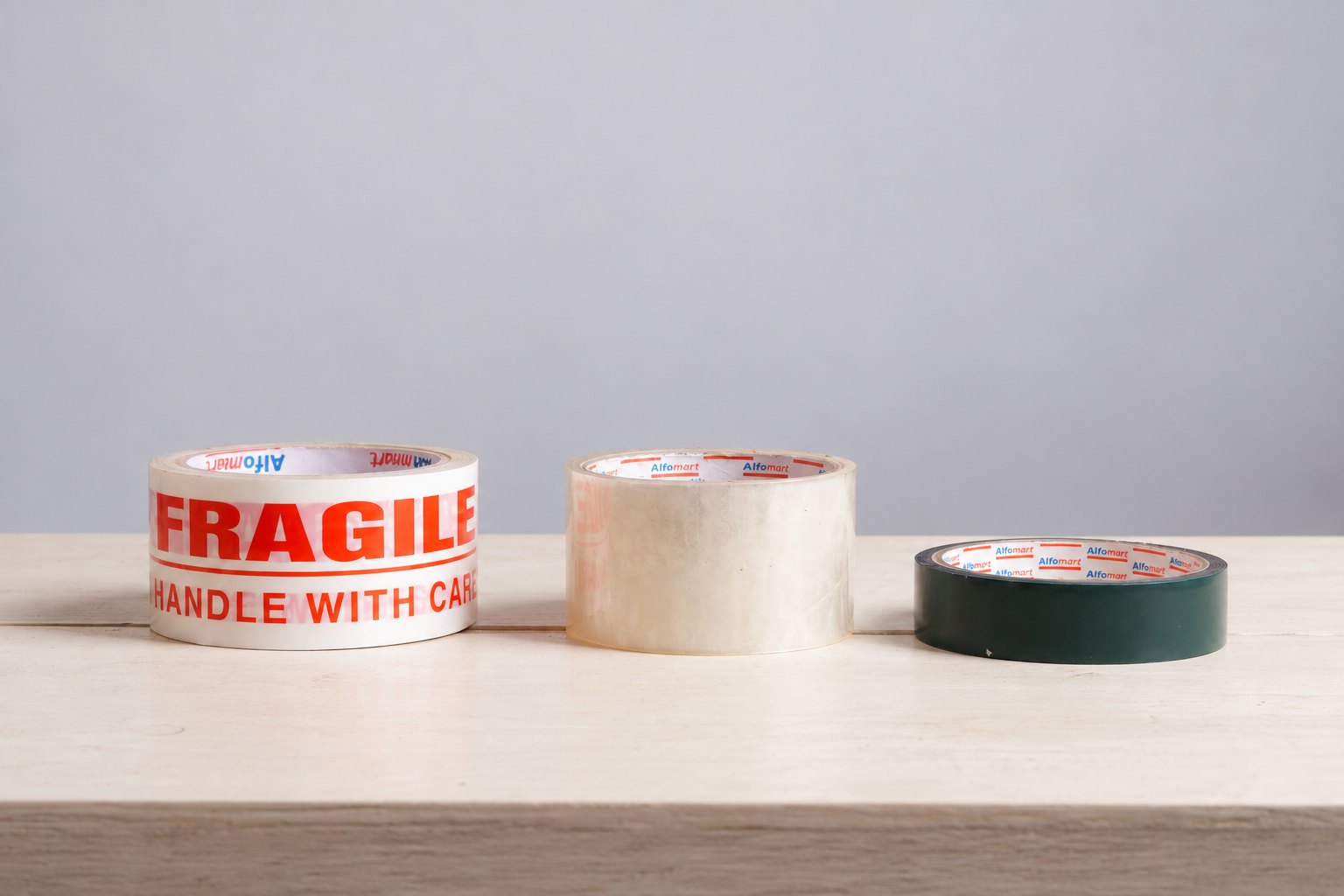
Use a small, controlled packing tape trial to narrow the cause. Keep the product, carton specification, fill arrangement, and application method the same unless one of those is the variable being tested. Do not change the tape, carton, dispenser, and room conditions together and then claim to know which change helped.
For example, if the short ends repeatedly lift on one carton batch, compare representative cartons from that batch with a known suitable batch using the same roll and procedure. If both fail, investigate another variable rather than concluding that the first batch is responsible. If only one fails, retain that observation and ask the carton and tape suppliers to assess compatibility.
A second trial might compare the current tape with a supplier-recommended alternative on the same carton. Use each product according to its own instructions. Observe at agreed intervals, including immediately after sealing and after the relevant holding period. The interval and sample size should fit the material guidance and your risk; an arbitrary overnight wait is not a universal standard.
Keep a compact record: carton code and batch, tape code and batch, packed contents and weight, application conditions, method, observation time, and what separated. Take both a whole-carton photograph and a close view of the affected area. Record unsuccessful samples too. Otherwise, a neat photograph of the best seal can conceal a recurring problem.
This comparison is troubleshooting, not certified transport testing. A hand peel, a photograph, or a sample that remains closed on a desk cannot establish survival through an entire shipping route. For fragile, heavy, valuable, or repeatedly damaged products, ask an appropriate packaging specialist about evaluating the complete packed product under a suitable test method.
The result should identify an action, not just a new adjective such as stronger. A surface problem may require a different carton or storage correction. Inconsistent contact may require an application or support change. A material mismatch may justify another grade of packing tape, followed by a repeat trial on the actual package.
If UTS handles the orders, connect that proposed change to the agreed sourcing and fulfillment plan. Send the carton and tape identification, the observed failure, comparison results, and the packing change you want reviewed. Confirm feasibility, cost, and the affected products before rollout. The service workflow does not establish that a particular tape brand, machine, or specialist test is included.
Keep unapproved combinations out of normal dispatch while the closure remains unreliable. Once an alternative is accepted, make its instructions specific enough to reproduce: exact materials, compatible package configuration, application method, and the observable reason to stop and ask for help. Check the first affected batch rather than assuming a purchase of new rolls has completed the correction.
Packing tape is one part of a package, not a cure for every carton problem. When an edge lifts, use the failure to choose the next comparison. The useful outcome is a repeatable seal on the package you actually ship, supported by appropriate evaluation—not a parcel covered in extra strips that nobody has tested.