Phone:
+85254973791
Email:
support@just-wonders.com

Phone:
+85254973791
Email:
support@just-wonders.com
What to confirm when you buy goods yourself and ask a shipping service to move them: product acceptance, handoff location, quote scope and separate fulfillment work.
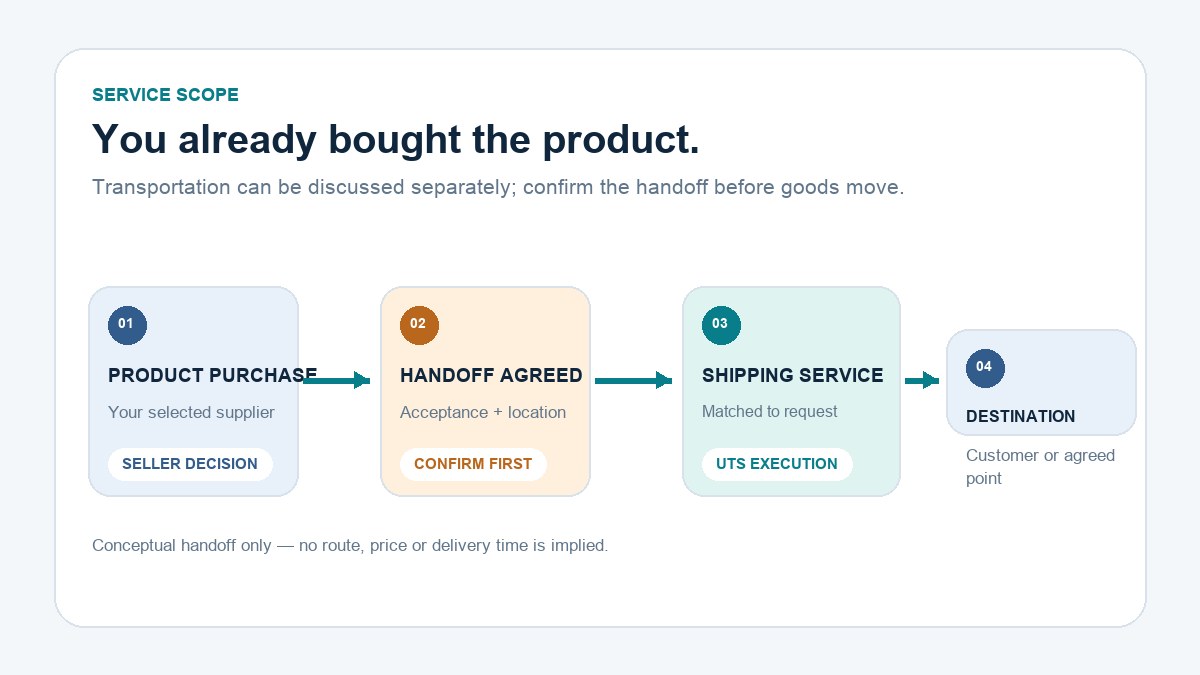
You bought the product yourself and now need it moved from China to your customers. You do not have to add purchasing just because you need a shipping service. UTS can discuss transportation as a separate service; before anything moves, confirm that the product is accepted, where the handoff happens, what the shipping quote includes, and where responsibility ends.
In short: Yes. If you bought the products yourself, you can still ask UTS about shipping from China as a standalone service. You just need to confirm four things before anything moves: the product is accepted, where the handoff happens, what the quote covers, and where UTS’s responsibility ends.
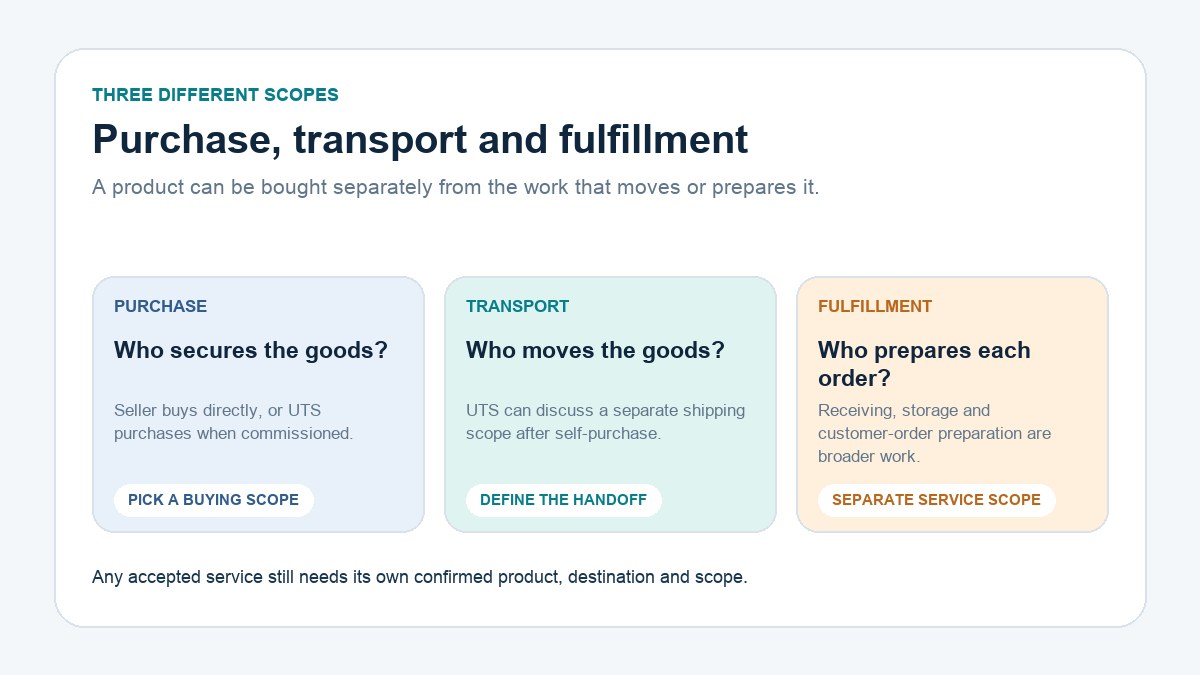
That distinction matters when you already have a supplier, use another purchasing agent, or bought stock for a particular market. A shipping service is one part of the work. It does not automatically add sourcing, storage, individual-order picking, packing, or every other fulfillment task.
You can keep the product-purchase decision in your own hands and ask about shipping from China as a separate scope. UTS’s current shipping page describes matching a route to the destination, product type, parcel weight, cost, and delivery target. It asks sellers to share the product, destination country, and expected order volume. Those details help assess a request; they do not establish that every item or handoff location is accepted.
The page describes shipping from the UTS China warehouse toward a customer, but it does not say where every independently purchased order must be delivered before transport. Do not infer an intake address, product eligibility, or included warehouse work from the page headline. Ask UTS to confirm the actual receiving point and accepted scope for your goods before your supplier dispatches them.
If your arrangement instead uses a forwarder you chose, the article about keeping your own forwarder explains that different handoff: UTS purchasing can send goods to your nominated forwarder, while that provider handles onward freight. Here, the product has already been purchased and you are asking whether UTS can handle transportation. The direction of the purchase and shipping relationship is different, so confirm which party receives the goods and which party moves them.
Product link or reference, destination country, expected volume, and any packed size or weight you already know. No guessing — if a detail is unknown, just say so.
Not every product and destination combination is accepted, so this is a real assessment, not an automatic yes.
Where exactly do the goods need to be delivered before transport starts, and who gets them there — you, your supplier, or someone else?
What it includes, what it doesn’t, and where responsibility ends. Read this part carefully — two quotes with similar prices can cover very different work.
Only after acceptance, handoff details, and the quote are confirmed does anything actually ship.
Before asking for a shipping quote, send the product reference or link, destination, expected order volume, and any parcel dimensions or weight you already know. You can also explain the delivery objective. Do not estimate unknown packed measurements as facts; say when details are not available. The purpose is to give UTS enough context to assess the request, not to calculate or book the shipment yourself.
Then get the specific handoff confirmed: whether the product can be accepted, where it must be delivered, who arranges the movement to that point, and what the shipping quote covers from there. Ask which service stages are included and which remain with you or another provider. A price is meaningful only when its starting point, destination, shipment details, and included work are clear.
This is especially useful if a supplier expects an address immediately. A message saying “send it to the warehouse” is not enough unless UTS has confirmed that address and the product can be received under the agreed arrangement. A shipping service may have requirements that depend on the product and destination. Confirming first avoids treating a proposed route or location as an accepted booking.
Do not assume the shipping service includes collection from the supplier simply because the goods are in China. The starting point in a shipping quote could be different from the supplier’s address. For shipping from China, get the origin point and any movement needed before the main transport stated clearly, including who is responsible for arranging that first handoff.
The shipping quote should also make the responsibility boundary understandable. Clarify whether it covers transport only or another agreed service, what information is still provisional, and what would require a revised quote. Do not assume duties, taxes, insurance, customs handling, storage, or customer-order preparation are included unless the actual offer says so.
There is no single price list, because a shipping quote is built around your specific shipment. The main factors:
The safest approach: share your real details and compare quotes that cover the same starting point and the same included work. A cheaper quote that starts later in the journey isn’t actually cheaper.
Moving a batch of purchased stock between agreed points is transportation; storing inventory or preparing recurring customer orders is fulfillment. A shipping service for the first does not establish the second. Shopify’s third-party logistics overview describes how providers may combine these services, but it does not define what a particular quote includes.
If another forwarder holds the goods, agree how it will release them and who will accept custody next. The current holder must authorize the release, and the receiving provider must confirm acceptance before the transfer is treated as agreed. Each provider’s responsibility starts with the leg it has accepted.
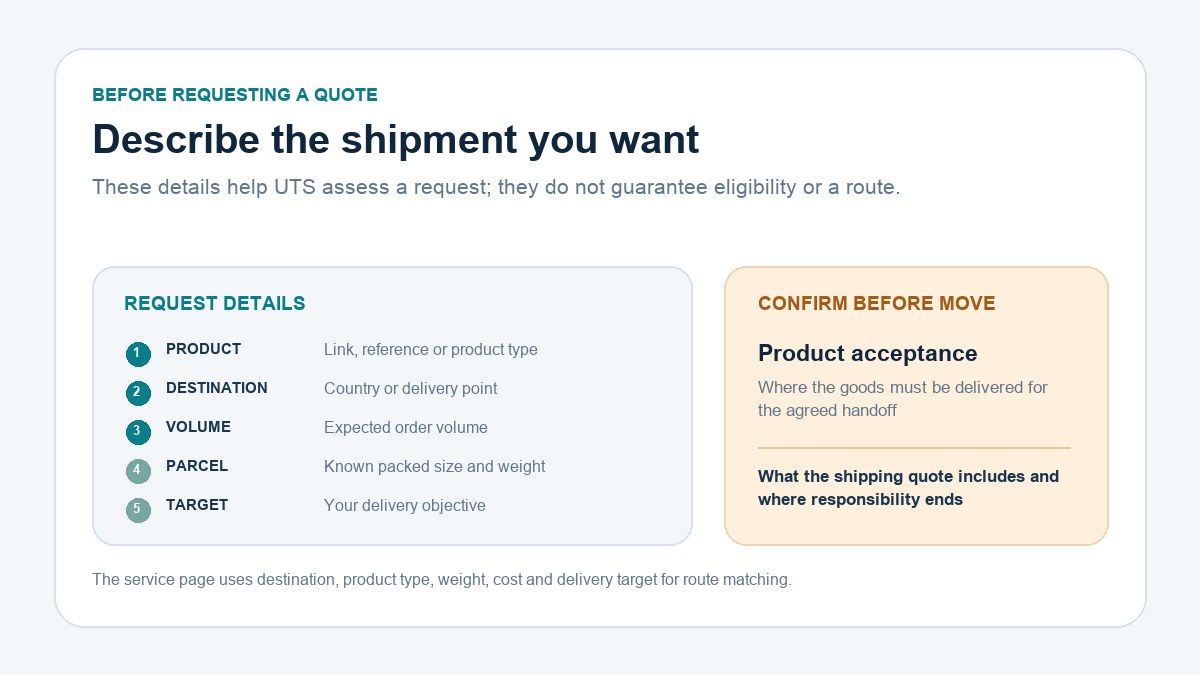
To start a shipping service inquiry, share the product link or reference, destination country, expected order volume, and any known packed size and weight. State that you purchased the product yourself and want to discuss transportation only. Ask where the goods should be handed over, whether the product can be accepted, what the shipping quote includes, and which steps belong to another provider.
For shipping from China, mention whether the supplier still holds the goods or another provider already has them. That single detail can change which handoff must be discussed first.
This shipping service request is easiest to assess when the origin, destination, product and requested scope are described together. If any shipment detail is unknown, identify it as unknown so the proposed shipping quote can be based on confirmed information rather than an assumption.
UTS can then assess the request against the information available and explain the proposed scope. If you want to review whether the service fits your shipment, use the shipping service page or message WhatsApp at +852 5497 3791. Share only the shipment details needed to identify your request, then follow the existing service-selection process. A discussion is not a confirmed booking; wait for the actual acceptance, handoff details, quote, and scope before arranging movement.
Yes. Purchasing and shipping are separate scopes. You can keep your own supplier or buying agent and ask UTS about transportation only. Just make sure the handoff point and accepted scope are confirmed before your supplier dispatches the goods.
Not automatically. The starting point of a quote can be different from your supplier’s address. Ask who arranges the first movement to the handoff point and whether that cost is included or separate.
At minimum: the product link or reference, the destination country, and your expected order volume. Packed size and weight help if you know them — and if you don’t, say so instead of estimating.
No. Shipping moves goods between agreed points; fulfillment covers storage, picking, and packing individual customer orders. A shipping service does not automatically include fulfillment work.
Only if the actual offer says so. Never assume these are included. Ask for the responsibility boundary in writing before you compare quotes.